Home » Why Building Envelope Selection Determines the Success of Modular Structure
Why Building Envelope Selection Determines the Success of Modular Structure
June 4, 2026
The Most Important Decision in Modular Construction Is Often Not the Structure
When planning a modular building, exhibition hall, sports venue, commercial pavilion, airport terminal, or semi-permanent facility, most stakeholders naturally focus on structural specifications.
Questions often revolve around:
What span can the structure achieve?
How high can the sidewall be?
How quickly can the building be installed?
How long can the structure remain in operation?
While these questions are important, they rarely determine how successful the building will be once people begin using it.
In reality, the long-term performance of modular architecture depends largely on another factor: the building envelope.
The building envelope forms the interface between the interior environment and the outside world. It influences comfort, energy efficiency, aesthetics, acoustics, security, climate control, and user experience.
A well-designed envelope can transform a modular structure into a premium exhibition venue, a climate-controlled commercial facility, or a high-performance sports environment.
A poorly selected envelope can create excessive energy consumption, uncomfortable indoor conditions, operational inefficiencies, and a disappointing visitor experience.
As modular structure evolves from temporary structures into sophisticated building solutions, envelope selection has become one of the most critical decisions in project planning.
Modular Structure Is No Longer Just About Tent
Historically, temporary structures were designed primarily to provide coverage.
The objective was simple: protecting occupants and equipment from weather conditions.
Today, modular architecture serves a very different purpose.
Around the world, modular structures are being used for:
Exhibition centers
Brand experience facilities
Sports hospitality environments
Transportation terminals
Educational campuses
Commercial showrooms
Corporate event venues
Semi-permanent public infrastructure
These applications demand far more than weather protection.
Users expect:
Comfortable indoor temperatures
Natural daylight
Premium aesthetics
Acoustic performance
Architectural identity
Energy efficiency
Long-term durability
Meeting these expectations requires a strategic approach to envelope design.
The success of modern modular architecture is no longer determined by structural engineering alone.
It is determined by how effectively the building envelope supports the intended use of the facility.
What Is a Building Envelope in Modular Structure?
The building envelope refers to all components that separate indoor spaces from external environmental conditions.
In modular architecture, this typically includes:
Roofing systems
Wall systems
Glazing systems
Architectural facade elements
Entry and access interfaces
Together, these components perform in various aspects.
Thermal Performance
The envelope controls heat gain and heat loss.
This directly impacts:
Air-conditioning requirements
Energy consumption
Occupant comfort
Particularly in regions with extreme climates, envelope performance can significantly influence operational costs.
Acoustic Performance
Many modular facilities host exhibitions, conferences, sporting events, and public gatherings.
Noise control becomes a critical factor.
The envelope helps determine how effectively the building isolates external noise and manages internal sound quality.
Architectural Appearance
For commercial and public-facing projects, the envelope often defines the first impression visitors receive.
The facade becomes part of the brand experience.
Security and Durability
Different wall systems offer varying levels of impact resistance, weather protection, and long-term durability.
The appropriate solution depends on the operational requirements of the facility.
Why One Wall System Cannot Solve Every Challenge
One of the biggest misconceptions in modular construction is the belief that a single wall system can satisfy every project.
In reality, different industries require different performance priorities.
A logistics warehouse does not require the same environment as a luxury brand pavilion.
A temporary sports facility does not require the same facade strategy as a transportation terminal.
This is why successful modular architecture begins with understanding project objectives rather than selecting materials.
The question should never be:
“What is the best wall system?”
The better question is:
“What performance does the building need to achieve?”
PVC Fabric Walls: Maximum Flexibility and Deployment Speed
PVC fabric walls remain one of the most widely used envelope solutions in modular construction.
Their greatest advantage is flexibility.
Projects requiring rapid deployment, frequent relocation, or temporary operation often benefit from fabric wall systems.
Typical applications include:
Event venues
Temporary sports facilities
Warehousing
Logistics centers
Seasonal operations
PVC fabric walls provide excellent weather resistance while allowing structures to be installed quickly and efficiently.
For projects where speed and adaptability are the primary objectives, fabric walls remain highly effective.
Aluminum Panels: Bringing Architectural Character to Modular Buildings
As modular construction increasingly enters commercial and public infrastructure sectors, architectural appearance becomes more important.
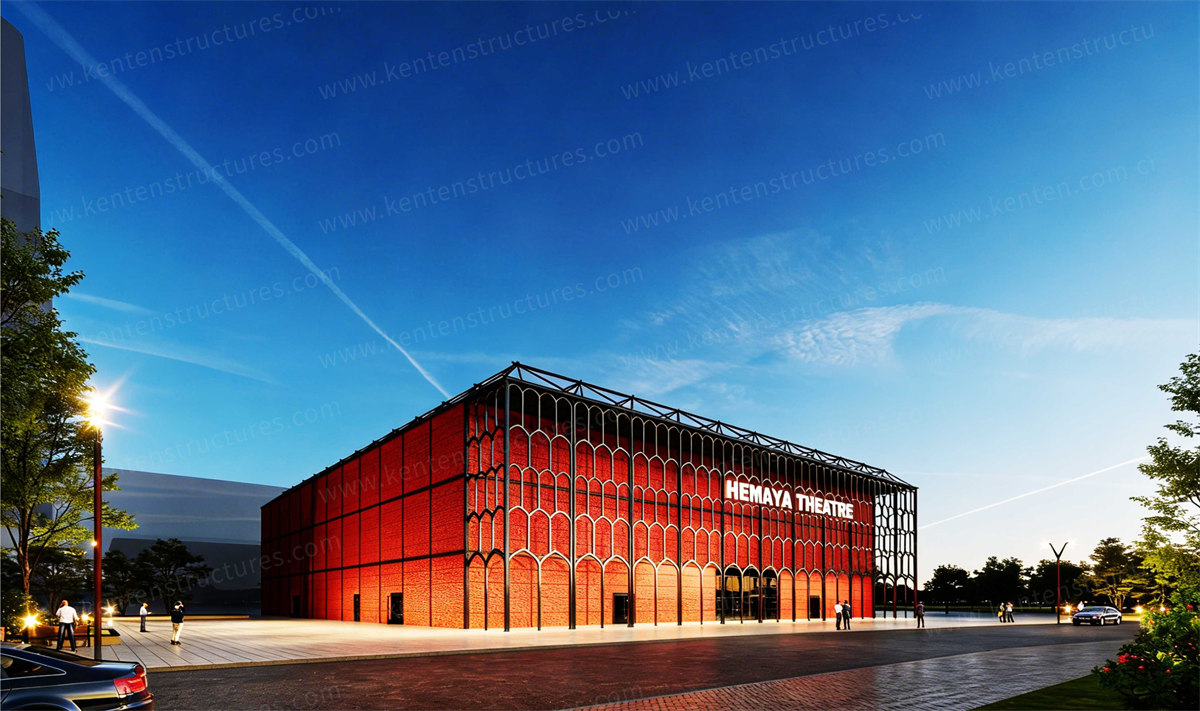
Aluminum panel systems provide a clean, contemporary facade that helps modular buildings achieve a more permanent architectural identity.
Advantages include:
Modern appearance
Corrosion resistance
Low maintenance requirements
Branding flexibility
Aluminum facades are commonly incorporated into:
Exhibition centers
Commercial pavilions
Transportation facilities
Corporate environments
These systems demonstrate how modular architecture can move beyond temporary structures and become visually integrated into urban environments.
ABS Panels: Practical Solutions for Functional Spaces
Certain facilities prioritize operational efficiency over architectural expression.
ABS panel systems offer a durable and economical solution for these environments.
Temporary offices
Educational facilities
Service buildings
Support infrastructure
The lightweight nature of ABS panels simplifies installation while providing a clean and functional interior environment.
For projects focused on practicality and efficiency, ABS systems offer significant advantages.
Sandwich Panels: The Foundation of Climate-Controlled Modular Structure
As modular buildings become larger and more sophisticated, thermal performance becomes increasingly important.
Sandwich panel systems have emerged as one of the most effective solutions for climate-controlled environments.
Their insulated core helps improve:
Thermal efficiency
Acoustic performance
Energy savings
Occupant comfort
This makes sandwich panels particularly suitable for:
Exhibition halls
Industrial facilities
Sports venues
Educational campuses
Semi-permanent commercial buildings
In many long-term applications, sandwich panels form the backbone of the building envelope strategy.
Glass Systems: Creating Transparency, Light, and Experience
Glass has become one of the defining materials of modern modular architecture.
Rather than functioning purely as enclosure systems, glass facades shape how people interact with the space.
Natural daylight, visibility, and openness all contribute to the overall experience.
Tempered Glass Panels
Tempered glass provides strength and transparency.
Applications include:
Hospitality structures
Showrooms
Exhibition entrances
VIP facilities
These systems create welcoming environments while maintaining structural reliability.
These solutions are particularly valuable in regions with high solar exposure.
Insulated Glass Systems
For premium environments, insulated glass delivers enhanced thermal and acoustic performance.
Applications include:
Executive facilities
Commercial showrooms
Airport terminals
Semi-permanent public buildings
These systems combine architectural aesthetics with operational performance.
The Future Is Hybrid Building Envelopes
One of the most significant developments in modular architecture is the growing adoption of hybrid envelope strategies.
Modern projects rarely rely on a single wall system.
Instead, different envelope components are combined to optimize performance.
Examples include:
Sandwich panels for climate control
Glass panels for public-facing facades
Aluminum panels for architectural branding
PVC systems for operational flexibility
This approach allows project teams to balance performance, appearance, functionality, and budget.
A building no longer needs to choose between efficiency and aesthetics.
Through hybrid envelope design, it can achieve both.
Industry Applications: Matching Envelope Strategy to Building Purpose
Industry
Recommended Envelope Strategy
Warehousing
PVC
Logistics Centers
PVC + Aluminum
Manufacturing Facilities
Sandwich Panels
Exhibition Centers
Sandwich Panels + Glass
Sports Hospitality
Glass + Aluminum Panels
Transportation Terminals
Aluminum + Insulated Glass
Educational Facilities
ABS + Sandwich Panels
Commercial Showrooms
Glass + Aluminum
Brand Experience Centers
Hybrid Systems
Semi-Permanent Public Buildings
Sandwich Panels + Insulated Glass
The most successful projects are those that align envelope design with operational goals.
Real-World Modular Architecture Requires More Than a Structure
Across the world, governments, developers, event organizers, and commercial operators are adopting modular architecture at unprecedented levels.
The reason is simple.
They need facilities that can be delivered faster than conventional construction while maintaining high performance standards.
Speed alone is no longer enough.
Users expect buildings that are:
Comfortable
Energy efficient
Visually appealing
Durable
Adaptable
The building envelope is what makes these expectations achievable.
It transforms a structural frame into a functioning environment.
It influences every aspect of the user experience.
And ultimately, it determines whether a modular building simply exists—or truly performs.
The Future of Modular Architecture Starts with Better Envelope Design
As the industry continues to evolve, the conversation is shifting away from temporary structures and toward complete building solutions.
The question is no longer:
“How quickly can a building be installed?”
The new question is:
“How effectively can the building perform throughout its lifecycle?”
The answer lies in the building envelope.
Whether utilizing PVC fabric walls, aluminum panels, ABS panels, sandwich panels, tempered glass, coated glass, insulated glass, or a hybrid combination of multiple systems, the most successful modular projects begin with a clear envelope strategy.
Because in modern modular architecture, the envelope is no longer an accessory to the structure.
It is one of the primary factors that determines its success.


 HIGH-END SERIES
 STRUCTURE TENTS
 ACCESSORIES