Home » Transparent Pagoda Tent Walls: What the PVC Fabric Weight Really Delivers
Transparent Pagoda Tent Walls: What the PVC Fabric Weight Really Delivers
July 17, 2026
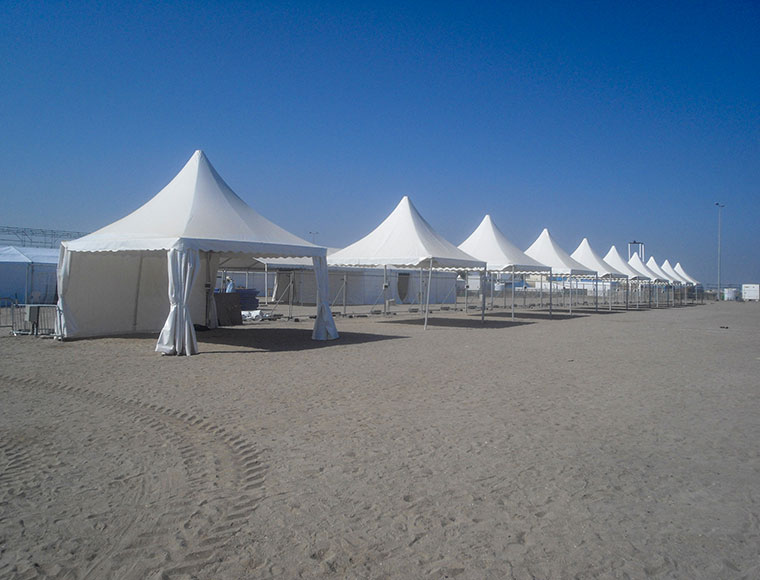
Search for a transparent pagoda tent and you will find plenty of listings promising a see-through structure, but the reality inside most PVC-coated marquees is more nuanced. The pointed pyramid roof that defines a pagoda tent is almost always opaque white fabric, while only the sidewalls may carry any translucency at all. Understanding why manufacturers split the fabric specification this way, and what “transparent” actually means on a spec sheet, helps event planners set realistic expectations before signing a rental contract or placing a purchase order.
Why the Word “Transparent” Gets Misapplied to Pagoda Tents
Marketing copy often blurs the line between transparent, translucent, and clear. A transparent pagoda tent, in the strict optical sense, would let you see distinct shapes through the fabric, much like a window. Most pagoda tent sidewalls do not do this. They diffuse light rather than transmit an image, which is a different property with a different name in textile engineering: translucency.
This distinction matters because a peaked-roof marquee and a fully clear-span crystal tent are built for different purposes. Pagoda tents prioritize weather protection and structural rigidity first, with light transmission treated as a secondary benefit of the sidewall fabric choice rather than the primary design goal.
Roof Versus Sidewall: Two Fabric Weights, Two Jobs
Component
Fabric Weight
Optical Property
Primary Function
Roof
800–950 g/sqm
Opaque
UV blocking, waterproofing, weather protection
Sidewall
650 g/sqm
Translucent
Daylight diffusion, branding surface, visibility
The roof uses the heavier coating because it takes the brunt of rain, UV exposure, and weathering; figures in the 80 to 100 km/h range are typical wind resistance ratings for the tent structure as a whole rather than the fabric alone. A lighter, less densely coated fabric on the sidewalls may allow daylight through without changing the fire-retardant compliance the material is expected to meet.
The Physics Behind Light Transmission in PVC-Coated Fabric
PVC-coated polyester works like a filter, not a window. The polyester base fabric sits underneath a polyvinyl chloride coating, and the thickness and finish of that coating affect how much light scatters versus how much gets blocked outright. A heavier roof fabric, the kind used on a pagoda tent roof, is chosen mainly for weather protection and durability, which is why roof panels are typically opaque in standard configurations.
Lighter sidewall fabric, such as the 650 g/sqm spec, can let diffused light pass through without forming a clear image. It resembles frosted glass in a bathroom window: light gets in, silhouettes stay vague, and privacy is preserved. That is roughly the closest a standard transparent pagoda tent gets to living up to its name.
Frame and Fire Rating: What Doesn’t Change When Fabric Does
Regardless of how translucent the sidewall fabric is, the load-bearing frame stays constant. A 6061-T6 aluminum alloy structure with hot-dip galvanized steel inserts at the connection points doesn’t respond to how much light passes through the fabric; it responds to wind load, imposed loads, and fatigue over repeated assembly cycles. That separation of structural and optical performance is intentional engineering, not an oversight.
Fire safety follows similar logic. Both the opaque roof and the translucent sidewall panels are typically specified to meet standards such as DIN 4102 B1/M2, alongside comparable NFPA and BS ratings, so translucency is a functional choice rather than a compromise on compliance.
Best-Fit Scenarios for Translucent Pagoda Tents
Event organizers running daytime exhibitions or brand activations often prefer translucent sidewalls because they reduce reliance on interior lighting during daylight hours, cutting both energy use and setup complexity. Medical stations and press events, by contrast, sometimes specify fully opaque walls for privacy, swapping the sidewall spec while keeping the same roof and frame.
Outdoor brand activations needing soft, even daylight without harsh shadows
Beachfront or plaza installations where interior visibility adds a welcoming feel
Exhibition booths combining printed banners with ambient sidewall light
Medical or operational tents where opaque walls are swapped in for privacy
FAQ: Clearing Up Confusion Around Pagoda Tent Transparency
Can a pagoda tent have fully clear, glass-like sidewalls? Some manufacturers offer optional clear PVC window inserts within an otherwise fabric wall, but a fully transparent pagoda tent, clear from floor to peak, usually belongs to a different product category and may use a different wall material system altogether.
Does a translucent sidewall reduce wind or fire resistance? No. Translucency comes from material formulation and surface finish, not from removing structural layers. A properly specified translucent sidewall can meet the same fire-retardant standards as an opaque one on the same structure, while overall wind resistance still depends on the complete tent system, anchoring, and site conditions.
For teams weighing a transparent pagoda tent against a fully opaque alternative, the decision usually comes down to how the space will be used rather than aesthetics alone. Daylight diffusion, UV protection, and structural load ratings all factor into which fabric weight belongs on the roof and which belongs on the walls. For us, that means specifying 6061-T6 aluminum frames, B1/M2-rated PVC fabric, and clear-span layouts designed for temporary or semi-permanent use, so the visual effect never comes at the cost of structural reliability.


 HIGH-END SERIES
 STRUCTURE TENTS
 ACCESSORIES