Home » Why Temporary Structure Is Becoming Essential to Global Sports & Brand Experiences
Why Temporary Structure Is Becoming Essential to Global Sports & Brand Experiences
May 29, 2026
Beyond the Race: The Infrastructure Powering Modern Formula 1
When most people think about Formula 1, they think about speed.
The cars. The drivers. The overtakes. The podium celebrations.
But behind every Formula 1 Grand Prix is another system operating at enormous scale — a temporary city built to support one of the world’s most complex live entertainment ecosystems.
Today’s Formula 1 events are no longer simply sporting competitions. They are multi-day global business platforms combining:
premium hospitality
sponsor activations
luxury entertainment
media production
executive networking
fan engagement
brand experiences
urban tourism
As Formula 1 continues its rapid commercial expansion — especially in North America — temporary structure is becoming one of the most critical components behind modern race operations.
And nowhere is this transformation more visible than at the Canadian Grand Prix.
Formula 1 Has Evolved Into a Global Experience Economy
The modern Formula 1 calendar is no longer designed purely around racing.
Cities like Canada, United States, and Singapore are now destination events where the race weekend extends far beyond the circuit itself.
Entire downtown districts transform into Formula 1 activation zones filled with:
sponsor lounges
hospitality suites
VIP events
luxury brand showcases
fan festivals
nightlife activations
media studios
waterfront experiences
For race organizers and global sponsors, the objective is no longer simply filling grandstands.
The objective is creating immersive environments that maximize:
guest engagement
premium spending
brand visibility
corporate hospitality
social media exposure
executive relationship building
This shift fundamentally changes the role of event infrastructure.
The Real Behind-the-Scenes Challenge: Space
One of the biggest operational pressures in modern Formula 1 is not the racing itself.
It is space management.
Every year, Formula 1 weekends require larger operational footprints to support:
hospitality expansion
sponsor activations
media production
support race operations
premium guest circulation
fan engagement areas
VIP entertainment spaces
At the same time, many urban circuits face significant permanent infrastructure limitations.
F1 Canada is a perfect example.
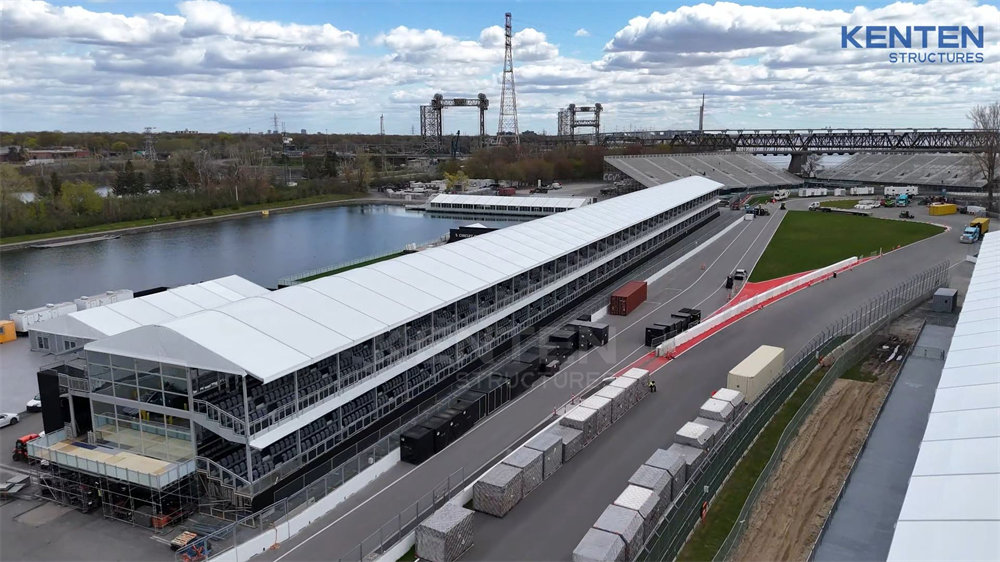
The circuit is located on an island environment with restricted expansion capability. Permanent buildings cannot easily scale to meet the growing commercial demands of modern Formula 1.
Yet expectations continue to rise.
Sponsors want larger hospitality environments. VIP programs continue expanding. Premium ticket categories increase. Media operations become more complex. Content production demands grow rapidly.
The result is clear:
Modular temporary structure is no longer optional.
It has become essential infrastructure.
The Impact of Formula 1 Expansion in North America
The addition of FIA Formula 1 races to Canada in 2026 signals something much larger than an expanded support schedule.
It represents the continued commercial expansion of the Formula ecosystem across North America.
More racing categories mean:
longer operational schedules
more paddock activity
larger hospitality demand
increased sponsor exposure
more guest traffic
greater infrastructure pressure
Race weekends are becoming denser, more commercialized, and operationally more demanding.
For infrastructure providers, this creates an entirely new category of opportunity.
Modern motorsport events now require scalable environments capable of supporting multiple layers of simultaneous activity across several consecutive days.
Traditional temporary tents are no longer sufficient for this level of operational complexity.
Temporary Structures Are Becoming Commercial Infrastructure
For decades, temporary structures in motorsports were viewed primarily as weather protection.
Today, that definition no longer applies.
Modern hospitality structures must now function as:
luxury venues
executive lounges
sponsor environments
media-ready facilities
premium viewing platforms
immersive brand experiences
This evolution is transforming the role of temporary structure across global sports events.
At premium motorsport events, structures are now expected to deliver:
architectural presentation
climate-controlled comfort
elevated guest experiences
sophisticated interior environments
premium circulation planning
integrated branding opportunities
day-to-night operational flexibility
In many cases, these temporary structures now directly influence:
sponsor perception
VIP satisfaction
social media visibility
corporate entertainment value
brand positioning
temporary structure is no longer hidden behind the scenes.
It has become part of the event itself.
Why Double-Decker Hospitality Structures Are Becoming Essential
One of the biggest challenges at urban Formula 1 circuits is maximizing operational capacity within limited footprints.
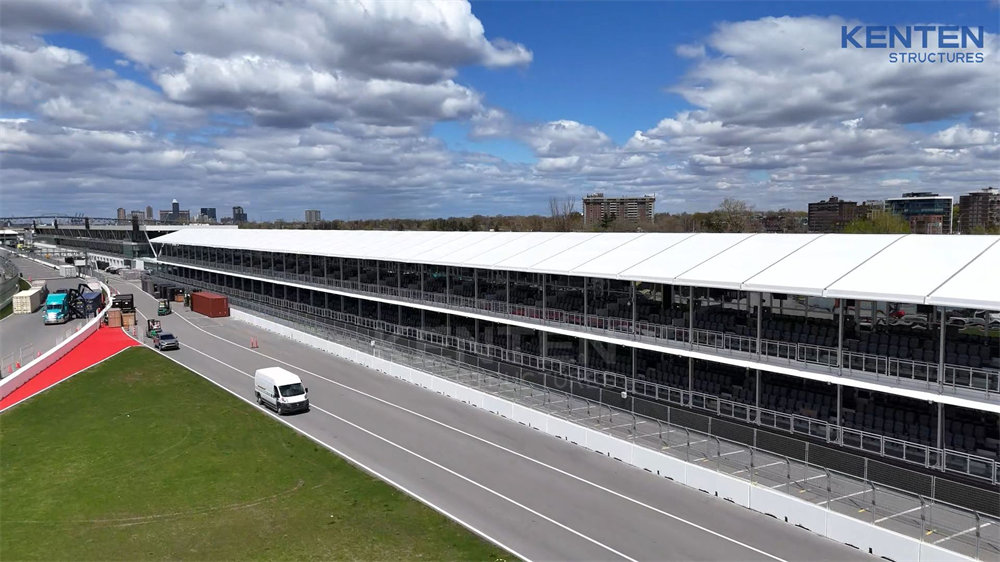
This is why double-decker hospitality structures are becoming increasingly important across global motorsport events.
The ability to expand vertically provides significant operational advantages:
increased guest capacity
elevated trackside viewing
multi-level hospitality segmentation
improved circulation efficiency
optimized land usage
KENTEN Double Decker is specifically designed for these high-density premium event environments.
Instead of consuming larger ground areas, organizers can create layered hospitality ecosystems within the same footprint.
VIP viewing decks
executive hospitality
premium sponsor lounges
entertainment areas
reception areas
catering operations
brand activations
meeting spaces
media support zones
This vertical integration creates a far more efficient operational environment during race weekends, especially in space-constrained urban circuits like Canada.
Formula 1 Hospitality Is Becoming Architectural
Another major trend reshaping global motorsport infrastructure is the architectural evolution of hospitality spaces.
Premium brands no longer accept environments that feel temporary.
Because hospitality environments are now directly connected to brand identity, sponsors increasingly expect:
modern facades
glass integration
sophisticated lighting systems
luxury interiors
immersive entrances
premium exterior presentation
For global sponsors, hospitality spaces function as:
client entertainment venues
executive networking environments
content production backdrops
public-facing brand experiences
This is why modern motorsport structures increasingly resemble commercial architecture rather than conventional event tents.
The industry is moving toward:
double-height spaces
atrium environments
panoramic glazing systems
integrated lighting design
premium façade systems
high-end environmental control
In many ways, Formula 1 hospitality is becoming a form of temporary luxury architecture.
The Rise of Multi-Functional Event Environments
Modern race weekends now operate almost continuously.
Especially with the expansion of Sprint Weekends, hospitality spaces are active throughout:
daytime racing
sponsor meetings
media activities
evening entertainment
private dining
networking receptions
content creation sessions
This dramatically changes infrastructure requirements.
Temporary structures must now support:
flexible operational layouts
rapid transitions between functions
climate adaptability
premium acoustic environments
integrated AV systems
lighting control
food and beverage operations
As a result, event infrastructure increasingly resembles a fully operational commercial venue.
Why This Trend Extends Beyond Formula 1
Although Formula 1 is one of the clearest examples, this application of double deckers is happening across the global event industry.
The same demands are emerging in:
international golf tournaments
waterfront sporting events
luxury brand activations
esports championships
music festivals
fan engagement events
corporate entertainment environments
Across all of these sectors, organizers face the same challenge:
How do you rapidly create premium large-scale environments without relying entirely on permanent construction?
The answer increasingly lies in modular double-deck structure.
Temporary Structure Is Becoming the Future of Global Event Infrastructure
The future of global sports and entertainment infrastructure will not depend solely on permanent venues.
Instead, it will depend on scalable systems capable of delivering:
operational flexibility
premium guest experiences
architectural presentation
rapid deployment
urban adaptability
sponsor integration
multi-functional usage
As commercial expectations continue rising across Formula 1 and other global sports platforms, temporary structure is moving from the background to the center of the event economy.
Behind every successful race weekend is now a sophisticated infrastructure ecosystem making the experience possible.
Increasingly, the ecosystem is modular, scalable, and architecturally driven.
The future of global sports experiences is not only being built in stadiums.


 HIGH-END SERIES
 STRUCTURE TENTS
 ACCESSORIES