
Event organizers and procurement teams evaluating pagoda tent manufacturers rarely start with aesthetics. They start with load calculations, fabric grades, and assembly timelines. A tent that looks identical to competitors in a brochure can behave very differently under 90 km/h wind gusts or a sudden downpour during a three-day exhibition. Understanding the frame alloy, connector type, and fabric weight is what separates a structure that survives a season from one that fails during it.
The structural backbone of a pagoda tent is its aluminum frame. Extruded 6061-T6 aluminum alloy, pressed into a four-channel profile, gives the frame a favorable strength-to-weight ratio, which is exactly why crews can install these units without cranes or heavy lifting equipment. Hot-dip galvanized steel inserts at the joints resist corrosion at connection points, an area where moisture tends to accumulate and where untreated steel typically fails first.
This connector logic matters more than it appears. A joint that loosens under repeated wind loading isn’t just a maintenance headache — it’s a liability during a live event with hundreds of guests inside.
The roof and sidewall fabrics aren’t identical, and that distinction is intentional. Roof panels use 800-950 g/m² opaque PVC-coated polyester, while sidewalls use a lighter 650 g/m² translucent variant that allows daylight through without sacrificing structural tension. Both are flame-retardant and UV-stabilized, which addresses two separate risks: fire code compliance for public assembly and fabric degradation from prolonged sun exposure.
Rated wind resistance sits at 80-100 km/h, and the operating temperature range spans -30°C to +70°C. That range is relevant for clients running installations across climate extremes — a security checkpoint tent in a desert region faces different fabric stress than one deployed for a winter sporting event.

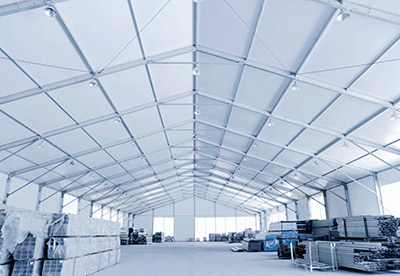
Internal support poles are the single biggest complaint from exhibitors and event designers, because they interrupt sightlines and limit booth layout flexibility. The pagoda tent’s clear-span design removes that constraint entirely, opening the full floor area for staging, seating, or retail fixtures.
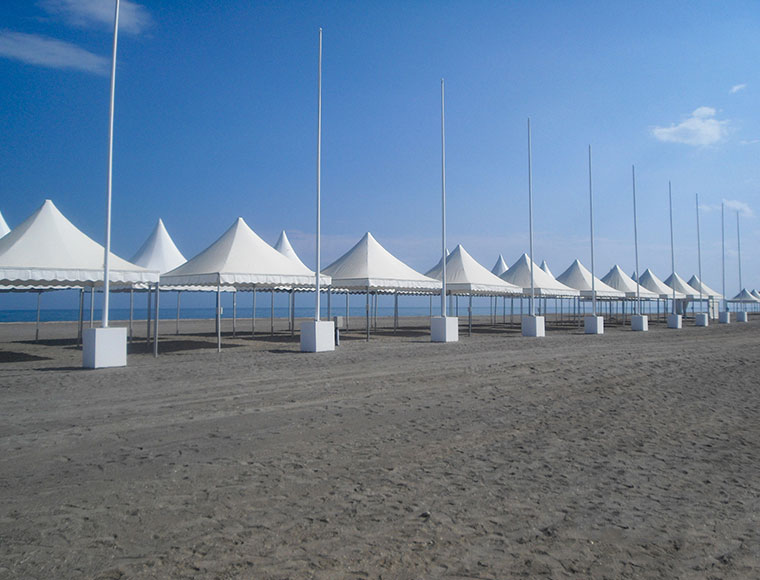
Available widths range from 3m to 10m, with a standard side height of 4m; heights between 2.5m and 3.5m are also available upon request. This modularity lets a single manufacturer’s product line scale from a small press briefing tent to a connected row of units forming a temporary terminal or checkpoint corridor.
| Specification | Value |
|---|---|
| Frame Material | 6061-T6 aluminum alloy, 4-channel extrusion |
| Connectors | Hot-dip galvanized steel insert |
| Roof Fabric Weight | 800-950 g/m² (opaque PVC) |
| Sidewall Fabric Weight | 650 g/m² (translucent PVC) |
| Wind Resistance | 80-100 km/h |
| Temperature Range | -30°C to +70°C |
| Widths Available | 3m, 4m, 5m, 6m, 8m, 10m |
| Standard Side Height | 4m (2.5m-3.5m on request) |
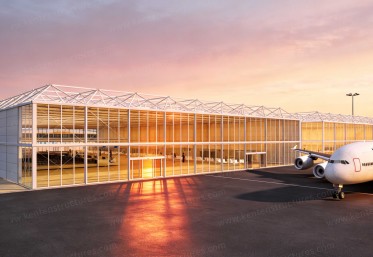
Pagoda tents show up in settings where reliability can’t be negotiated after the fact. Large-scale international sporting events have relied on this format for spectator checkpoints and medical stations, where a red-cross-marked tent needs to be identifiable, weatherproof, and quick to relocate between venue zones.
Common deployment scenarios include:
How long does a pagoda tent typically last in active use?
With proper storage and periodic inspection of connectors and fabric tension, these structures are engineered for a service life exceeding 15 years, though actual longevity depends on climate exposure and maintenance frequency.
Can the same frame system support different roof colors or branding?
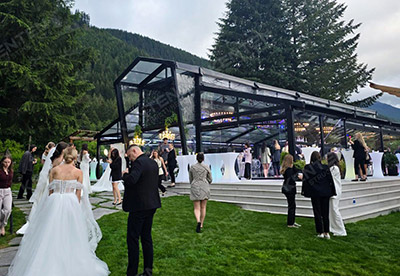
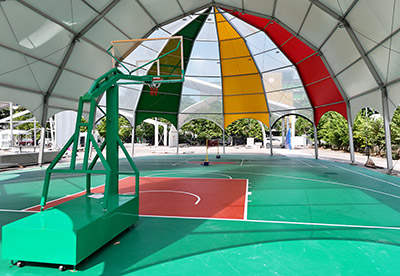
Yes. The modular aluminum frame accepts different PVC panel sets, which is why the same structural base can appear as a plain white tent or a fully branded activation space for a car launch.
Is assembly possible without specialized equipment?
The lightweight aluminum profile and modular joint system are designed specifically so a small crew can complete installation without cranes or heavy machinery, which reduces labor cost on tight event timelines.
Choosing among pagoda tent manufacturers ultimately comes down to whether the published specifications hold up under real load conditions — wind ratings, fabric certifications, and frame alloy grade aren’t marketing details, they’re the actual determinants of whether a structure performs when it matters. For us, those numbers are the starting point of every design conversation, not an afterthought added to a spec sheet.