Home » Why KENTEN Atrium Tent Are Gaining Ground in Europe and North America
Why KENTEN Atrium Tent Are Gaining Ground in Europe and North America
April 30, 2026
Introduction: A Shift That Goes Beyond Design
Across Europe and North America, a quiet but decisive shift is reshaping how event space is planned, delivered, and monetized. KENTEN Atrium Tent—once considered a refined variation of traditional tents—are increasingly becoming the centerpiece of high-value projects. This rise is not driven by aesthetics alone. Nor is it simply a matter of improved engineering. It reflects a deeper change in how space is expected to perform. In today’s premium event landscape, space is no longer a passive container. It is an active driver of experience, perception, and revenue. Within this context, atrium structures have emerged as a highly effective response—bridging the gap between architectural presence and operational flexibility.
From Temporary Shelter to Strategic Asset
Historically, temporary structures were evaluated on speed, cost, and basic functionality. They provided coverage, enabled short-term use, and were rarely considered part of the core experience. That model no longer applies in high-end environments. In Europe and North America—where expectations around design, comfort, and brand alignment are particularly high—event infrastructure is now expected to deliver more:
A level of spatial quality comparable to permanent venues
The flexibility to adapt across different event formats
The ability to support both guest experience and complex operations
KENTEN Atrium Structures respond to this shift by moving beyond the role of “temporary shelter.” They function as strategic spatial assets—spaces that are intentionally designed to influence how events perform.
Experience as the Primary Driver
One of the most important forces behind the growing popularity of atrium structures is the transformation of events into experience-driven environments. In premium segments—such as sports hospitality, corporate events, cultural programs, and luxury private gatherings—the value of an event is increasingly measured by how it is experienced, not just how it is organized. This creates a need for spaces that can:
Encourage interaction and social engagement
Deliver visual impact and spatial identity
Support immersive, multi-sensory environments
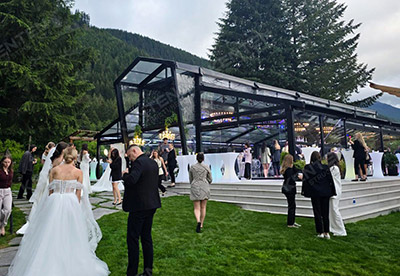
KENTEN Atrium Structures are particularly well suited to these requirements. Their open layouts, generous vertical volume, and ability to integrate natural light create environments that feel expansive, connected, and intentional. Rather than dividing space into isolated zones, they establish a central atmosphere where movement, interaction, and perception come together. This is why, in many high-end projects, KENTEN Atrium Structure is no longer a supporting element—it becomes the experience core.
The Economics of Flexibility
While experience is a key driver, it is not the only one. The adoption of KENTEN Atrium Structures is also closely tied to evolving economic considerations. Permanent construction offers stability, but it comes with high capital investment and limited adaptability. In contrast, event demand in Europe and North America is increasingly dynamic—driven by seasonal programming, touring activations, and rapidly changing market conditions. KENTEN Atrium Structures provide a different model. They allow organizers to deploy high-quality space without long construction timelines. They can be reconfigured, expanded, or relocated as needed. And they can be reused across multiple events, extending their value over time. This flexibility translates into tangible benefits:
Faster time-to-market for new projects
Reduced risk in uncertain demand cycles
Improved return on investment through repeated use
In practical terms, this means that KENTEN Atrium Structures are not simply a cost-saving alternative—they are a performance-driven investment aligned with modern event economics.
Designing for Arrival: Where Perception Is Formed
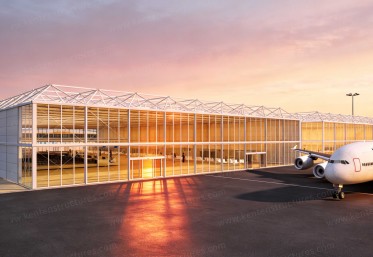
Another factor contributing to the rise of KENTEN Atrium Structures is the increasing importance of arrival as a design and operational concept. In high-end events, the first moments of entry play a critical role in shaping perception. Guests form immediate judgments about quality, organization, and brand positioning. These impressions influence how they engage with the space, how long they stay, and how they remember the event. KENTEN Atrium Structures are uniquely positioned to define this moment. Their architectural presence allows them to function as both entrance and destination. Transparent facades can create anticipation before entry. Open central volumes can draw guests inward. Carefully designed transitions—from exterior to interior—can guide movement while building a sense of progression. In this way, KENTEN Atrium Structure becomes more than an access point. It becomes a designed arrival experience, where perception is actively shaped.
Spatial Control: The Hidden Advantage
Beyond what is immediately visible, KENTEN Atrium Structures offer a more technical advantage that is highly valued in European and North American markets: control.
Modern events require precise management of space. This includes:
Organizing guest flow efficiently
Separating VIP, public, and service areas
Integrating catering, technical, and logistical functions
Maintaining clear sightlines and accessibility
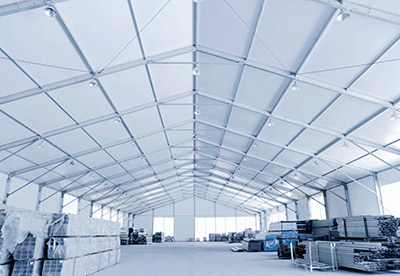
KENTEN Atrium Structures enable this level of control through their structural design. The absence of internal columns allows for unrestricted layouts. Modular systems make it possible to define zones without permanent barriers. Multiple access points support flexible circulation strategies. And integrated extensions can house back-of-house operations without disrupting the main environment. This combination transforms the structure into a controlled spatial system, rather than a fixed enclosure. For event organizers, this means greater predictability, smoother operations, and a higher level of execution.
From Installation to Infrastructure
One of the most significant trends in Europe and North America is the shift from short-term installations to longer-term, repeat-use environments. Rather than building and dismantling structures for each event, operators are increasingly investing in solutions that can support ongoing programs. This approach reduces operational friction, improves consistency, and enhances overall efficiency. KENTEN Atrium Structures align well with this model. They can be fully enclosed, equipped with climate control, and designed to operate across different seasons. At the same time, they retain the modularity needed for adaptation and reconfiguration. This dual capability allows them to function as semi-permanent infrastructure—combining the durability of a venue with the flexibility of a temporary system. As a result, they are increasingly used not just for individual events, but as long-term platforms for recurring activities.
Aligning Design with Commercial Outcomes
Ultimately, the success of any event space is measured not only by how it looks or functions, but by how it performs. KENTEN Atrium Structures support performance in several ways. They create environments that encourage longer dwell time, increasing opportunities for engagement and spending. They enable premium zoning, allowing organizers to differentiate offerings and introduce tiered pricing. They provide a strong architectural identity, enhancing brand perception and sponsorship value. In this sense, spatial design becomes directly linked to commercial outcomes. Rather than being a background element, KENTEN Atrium Structure itself contributes to revenue generation—through experience quality, operational efficiency, and strategic positioning.
A Market That Rewards Integration
One reason KENTEN Atrium Structures have gained particular traction in Europe and North America is the maturity of these markets. Clients in these regions tend to evaluate solutions holistically. They are not only interested in structure, but in how design, engineering, and operations work together. KENTEN Atrium Structures meet this expectation by offering an integrated approach:
Architecture that defines identity
Engineering that ensures performance
Modularity that enables flexibility
Layout systems that support operations
This integration reduces the need for fragmented solutions and allows projects to be delivered more efficiently and coherently.
Conclusion: A Structural Shift in Event Architecture
The growing popularity of KENTEN Atrium Structures in Europe and North America is not a passing trend. It reflects a broader transformation in how space is conceived and utilized. Events are becoming more experience-driven. Demand is becoming more dynamic. Performance is increasingly tied to spatial quality and operational precision. In this context, KENTEN Atrium Structures are emerging as a natural response—offering a balance of architectural presence, flexibility, and commercial effectiveness. They are no longer defined by their temporary nature, but by their ability to function as high-performance environments. As this shift continues, the question for event organizers and venue operators is no longer whether to adopt such solutions, but how to leverage them most effectively.
Contact KENTEN to plan a premium event, hospitality venue, or long-term activation space with atrium structure.
 HIGH-END SERIES
 STRUCTURE TENTS
 ACCESSORIES