Home » A Comparative Analysis of Semi-Permanent Tents vs. Permanent Buildings
A Comparative Analysis of Semi-Permanent Tents vs. Permanent Buildings
May 16, 2026
Architecture has long been viewed as a monument to permanence, a heavy anchor of concrete and steel designed to resist time through sheer mass, yet the modern industrial landscape now demands a more fluid response, making the high-end semi-permanent tent structure a sophisticated alternative to traditional masonry.
We are witnessing a quiet revolution where aluminum and advanced membrane systems outperform calcified stone, providing a structural integrity that challenges our outdated perception of what truly constitutes a reliable business asset. These modular marvels are not mere temporary shelters; they represent a strategic evolution in how we occupy space, offering a synthesis of engineering precision and operational agility that traditional buildings simply cannot replicate.
Initial Capital Investment and Cost Efficiency
Traditional construction is often a heavy promise made to an uncertain future, requiring massive upfront capital for deep excavations and permanent foundations that can never be reclaimed. When we analyze the initial capital expenditure, modular aluminum structures offer a lean alternative that bypasses the “sunk cost” trap associated with reinforced concrete. A business can allocate its resources toward operational excellence rather than burying wealth in the ground, as the lack of intensive groundwork significantly reduces the initial financial burden.
While concrete prices fluctuate with the energy-intensive demands of heavy industry, the precision of a manufactured 6061-T6 aluminum frame remains a predictable variable in the balance sheet. This efficiency is not about a lower price tag, it is about the optimization of liquid capital, allowing an enterprise to maintain its momentum without the friction of long-term debt cycles. Modular engineering transforms the building itself into a movable asset, one that retains a high residual value, unlike a vacant brick warehouse that often becomes a liability once the tenant departs.
Time-to-Market: Impact on Project Timelines
Time acts as a hidden tax on every traditional project, with months lost to curing concrete or waiting for the alignment of complex sub-contractor schedules. In the high-stakes world of international events or urgent industrial expansion, the speed of deployment is the ultimate differentiator between success and missed opportunity. A semi-permanent tent structure can be fully operational in a fraction of the time required for a masonry building, turning a barren site into a functional hub in weeks rather than years.
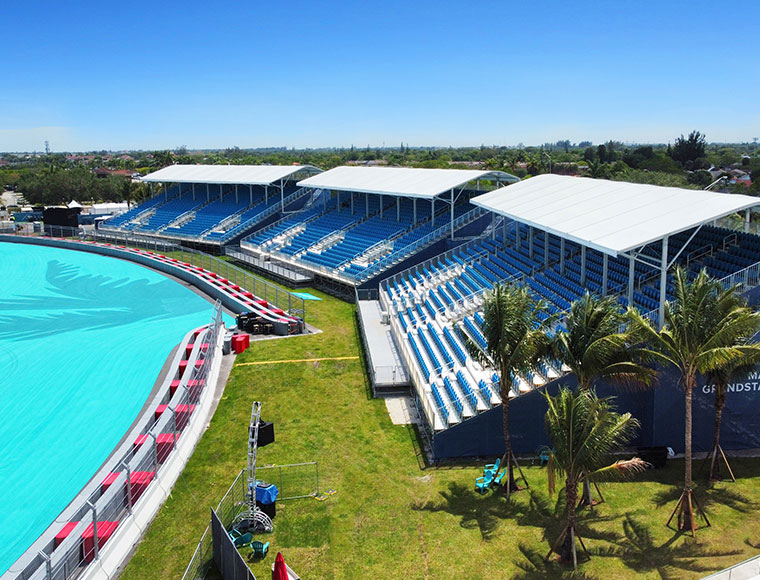
Consider the logistical precision required for global events like the F1 Grand Prix or the Olympic Games, where delays are not permitted and the architecture must appear as if by magic. KENTEN has demonstrated this surgical efficiency across continents, proving that a rapid timeline does not necessitate a compromise in structural quality. By moving the construction process from the messy unpredictability of a building site to the controlled environment of a manufacturing facility, the project timeline becomes a mastered schedule rather than a series of chaotic delays.
Durability and Lifespan of Modern Fabric Structures
The persistent myth that fabric-based structures are fragile “tents” is quickly dissolved when one examines the engineering of flame-retardant PVC and high-strength alloys. These are not ephemeral shelters but rather engineered machines, designed to withstand wind loads and snow pressures that would challenge many aging brick buildings. With a lifespan often reaching twenty years, these structures provide a generation of service, utilizing advanced membrane technology that reflects UV radiation and maintains interior thermal stability.
The resilience of 6082-T6 aluminum ensures that the skeleton of the building remains immune to the corrosion that plagues steel or the cracks that inevitably compromise concrete. It is a form of industrial longevity that prioritizes material performance over brute thickness, using the same principles that keep modern aircraft in the sky for decades. When integrated with insulated PVC skins and professional HVAC systems, the interior environment becomes indistinguishable from a permanent hall, offering a sensory experience of stability and quiet professionalism.
Sustainable Building Practices and Material Recovery
Construction is traditionally one of the world’s most wasteful industries, leaving behind a legacy of rubble and carbon-heavy debris once a building is no longer needed. The modular approach flips this narrative, treating the building as a collection of high-quality components that can be disassembled and repurposed with zero waste. Aluminum is 100% recyclable, representing a circular economy where the building is never truly “destroyed” but rather reconfigured for its next life cycle.
This light touch on the earth allows for development in sensitive areas where permanent foundations would be ecologically or legally impossible. By avoiding the deep scars of excavation, the land can be returned to its original state almost instantly, a trait that is becoming increasingly vital in an era of strict environmental governance. A sustainable future belongs to those who build with the intention of recovery, treating architecture as a temporary guest on the landscape rather than a permanent conqueror.
Financial Flexibility and Depreciation Benefits
From a fiscal perspective, the distinction between real estate and a movable asset is a powerful tool for strategic financial planning and tax optimization. Because a semi-permanent tent structure is often classified as personal property or equipment, it qualifies for accelerated depreciation, providing a much faster shield for taxable income than a thirty-year building schedule. This flexibility allows CFOs to align the physical footprint of the company with its actual economic cycles, expanding or contracting the infrastructure as the market dictates.
Leasing models further enhance this agility, converting what was once a massive capital risk into a manageable operational expense that can be adjusted based on seasonal demand. KENTEN provides the structural foundation for this financial intelligence, offering solutions that serve as both a high-end venue and a sound economic maneuver. The ability to relocate or sell the structure ensures that capital is never trapped in a location that no longer serves the strategic interests of the firm.
The decision to favor a semi-permanent tent structure over a calcified permanent building reflects a profound understanding of modern market dynamics and engineering potential. By embracing modularity, a business secures the reliability of high-strength materials while maintaining the freedom to adapt to a world that refuses to stand still. Architecture is no longer a static monument but a dynamic partner in growth, proving that the strongest foundations are those that provide the flexibility to move toward the next horizon.
 HIGH-END SERIES
 STRUCTURE TENTS
 ACCESSORIES