Home » Arcum Structure for Padel Courts: Turning Padel Infrastructure Into a High Revenue System
Arcum Structure for Padel Courts: Turning Padel Infrastructure Into a High Revenue System
June 24, 2026
Introduction: Padel’s Real Growth Problem Is Not Demand
Padel is one of the fastest-growing sports in the world. From Spain and Italy to the UAE, UK, and Latin America, new clubs are opening at an unprecedented pace, driven by professional circuits such as Premier Padel and rapidly expanding amateur participation.
But beneath this visible growth lies a structural inefficiency that most operators are only beginning to recognize.
Padel is not constrained by demand. It is constrained by usable time.
Courts are being built faster than ever, yet many facilities still fail to convert demand into continuous, monetizable play hours. Rain interruptions, seasonal temperature shifts, lighting limitations, and inconsistent comfort conditions fragment the operational day into unreliable booking windows.
In other words: the real bottleneck in padel club growth is not construction capacity — it is court utilization efficiency.
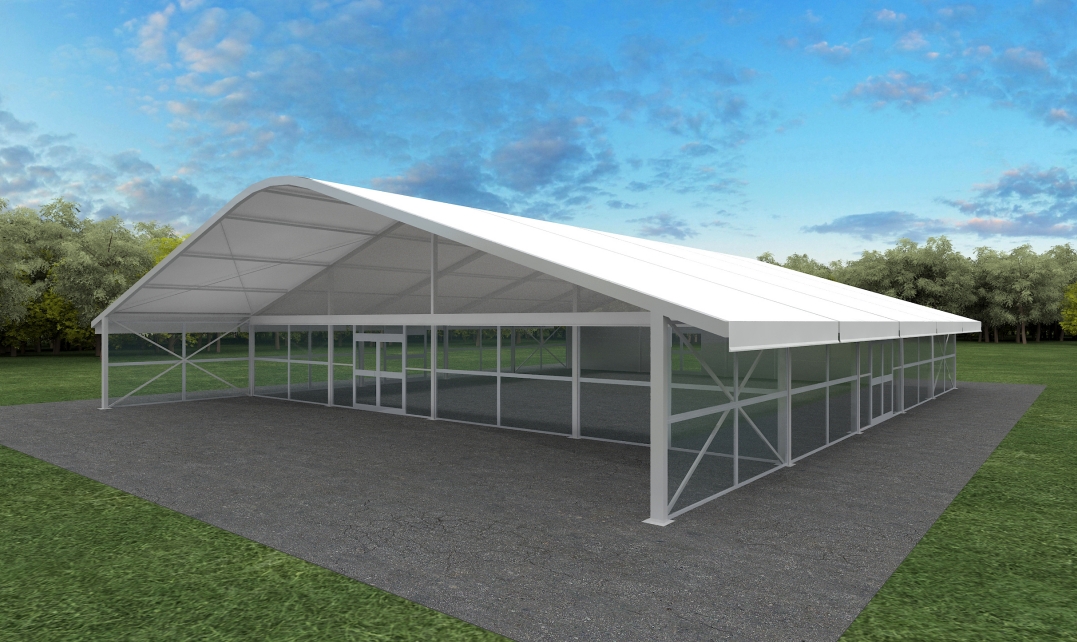
This is where KENTEN Arcum Structure Tent introduces a fundamentally different logic: not as a building system, but as an optimization infrastructure for padel operations.
It creates continuous, high-efficiency playable environments where every hour becomes monetizable.
The Hidden Economics of Padel Clubs: Why Revenue Leaks in Plain Sight
Most padel operators evaluate success using visible indicators such as the number of courts, membership growth, or peak-hour occupancy. These metrics are important, but they do not capture the underlying mechanism that determines profitability.
The real economic driver is something far more fundamental: playable hour efficiency (PHE).
In traditional padel environments, PHE is severely constrained by:
Weather volatility
Outdoor courts lose entire booking blocks due to rain, wind, or extreme heat.
Thermal discomfort
Even when courts are technically playable, heat stress reduces willingness to play during peak daytime hours.
Lighting inconsistency
Poor or uneven lighting reduces evening utilization or shortens session duration.
Operational fragmentation
Cancellations, rescheduling, and seasonal demand cycles reduce predictability.
KENTEN Arcum Structure solves the core economic gap of modern padel infrastructure: converting theoretical availability into actual usable hours without volatility.
Why Traditional Padel Infrastructure Fails
Most existing padel facilities were not designed around operational intensity. They were designed around spatial accommodation. The goal was to create courts, not to optimize how those courts behave over time.
1. Open-air courts
Low cost, but fully exposed to environmental disruption.
2. Basic roof coverage systems
Partial protection, but no climate or lighting optimization.
3. Generic sports halls
Large-volume spaces designed for multiple sports, not padel-specific flow.
Across all these models, the fundamental issue remains the same: they prioritize space coverage rather than time optimization.
As a result, operators end up managing facilities that look complete but behave inconsistently. Courts are present, but their usability is unstable.
KENTEN Arcum Structure: Engineering Continuous Play Environments
KENTEN Arcum Structure introduces a different operational logic. Instead of treating padel courts as static assets inside a building, it treats them as part of a continuous operational environment that must remain stable across time.
The objective is not simply to protect play areas, but to eliminate the conditions that interrupt play.
This is achieved through what can be described as a Continuous Play Environment (CPE), where climate, lighting, and operational conditions are stabilized into a single integrated system.
Climate Continuity System
Climate continuity is the first layer of this system. By integrating compatibility with HVAC systems, insulated envelope configurations, and controlled ventilation design, KENTEN Arcum Structure reduces the influence of external weather fluctuations. This allows clubs to maintain consistent internal temperatures regardless of seasonal variation. As a result, courts remain usable across a significantly extended portion of the daily cycle, including hours that would otherwise be underutilized in outdoor environments.
Lighting Continuity System
Lighting continuity is the second layer. The curved geometry of KENTEN Arcum Structure works together with high-performance membrane materials to diffuse incoming light evenly across the entire interior space. Instead of harsh directional lighting or uneven brightness zones, the environment becomes visually uniform. This reduces glare, minimizes shadow interference, and improves overall visual stability for fast-paced ball tracking.
Operational Continuity System
Operational continuity is the third layer. Because environmental interruptions are minimized, scheduling becomes more predictable. Courts are no longer frequently removed from availability due to external conditions, which allows operators to build stable booking systems and long-term utilization planning.
Together, these three systems convert padel courts from condition-dependent assets into continuous operational environments.
From Courts to Revenue Engines
Once the operational environment becomes stable, the economic behavior of the entire facility changes.
Instead of focusing on how many courts exist, operators begin to focus on how intensively each court can be used across a full day. This shift transforms padel infrastructure from a spatial investment into a throughput-driven revenue system.
Higher Booking Density
Booking density naturally increases because playable hours are no longer fragmented. Courts can operate continuously from morning to late evening without significant disruption. This creates more predictable utilization patterns, which in turn allows clubs to optimize scheduling systems and reduce idle time between sessions.
Extended Peak-Hour Windows
Peak-hour windows also expand in a meaningful way. In traditional systems, peak usage is often constrained to narrow time blocks influenced by weather and daylight conditions. In KENTEN Arcum Structure, these constraints are significantly reduced, allowing high-demand periods to extend more consistently across the day.
Reduced Idle Time
At the same time, idle time decreases because cancellations and rescheduling events become less frequent. This has a compounding effect on revenue stability, since even small reductions in downtime translate into substantial annual gains when multiplied across multiple courts.
Premium Pricing Capability
Finally, the consistency of experience enables more flexible pricing strategies. When players can expect reliable conditions every time they book a court, their willingness to pay for access increases. This creates a structural pricing advantage that is directly linked to environmental stability rather than marketing or location alone.
In this way, KENTEN Arcum Structures do not simply increase usage. They increase the conversion efficiency between available time and revenue generation.
From Facility to Operational Infrastructure
As utilization becomes more stable, padel clubs begin to evolve from fixed sports venues into dynamic operational systems.
In traditional models, a club is a static asset with a fixed number of courts and limited adaptability. Expansion typically requires significant reconstruction or long-term development cycles.
In KENTEN Arcum Structure, the facility behaves differently. It becomes modular in both physical and operational terms.
Courts can be added incrementally based on demand without disrupting existing operations. This allows clubs to align expansion with actual market performance rather than speculative forecasting.
Internally, the space is no longer limited to court usage alone. Because the environment is controlled and consistent, additional functional layers can be integrated into the same structural envelope. Training zones, social areas, coaching spaces, and event configurations can coexist within a single operational system.
This creates a shift in definition. The facility is no longer just a place where padel is played. It becomes a platform where multiple revenue-generating activities operate simultaneously.
Monetizing Off-Peak Hours
One of the most underutilized aspects of traditional padel facilities is off-peak time. Outside of peak booking hours, courts often remain idle or underused.
KENTEN Arcum Structure introduces the ability to convert these periods into structured commercial opportunities.
Because the environment is stable and controllable, clubs can host a wider range of activities beyond regular gameplay. These include amateur tournaments, corporate leagues, brand activations, training camps, and social events that extend the usage cycle of the facility.
This transforms the economic logic of padel infrastructure. Instead of relying solely on recurring court bookings, operators can activate secondary revenue streams that monetize time slots which would otherwise remain unused.
Over time, this significantly increases the total revenue density of the facility without requiring additional physical expansion.
Why High-Performance Clubs Are Moving Toward Controlled Environments
Across mature padel markets, a clear divergence is emerging between standard facilities and high-performance clubs.
Standard clubs continue to operate within traditional models where variability is accepted as a cost of operation. High-performance clubs, however, are increasingly investing in controlled environments that prioritize consistency over flexibility.
The difference is not cosmetic. It is operational.
Facilities with environmental control systems are able to deliver predictable user experiences across all courts and all time slots. This predictability directly influences booking behavior, retention rates, and pricing power.
KENTEN Arcum Structures represent a shift toward operational certainty. They reduce variability in a sport that is becoming increasingly commercialized and time-sensitive.
Conclusion: The Future of Padel Infrastructure Is Not Spatial — It Is Temporal
The evolution of padel is not simply a story of increasing participation. It is a story of increasing operational intensity.
As clubs scale, the critical question is no longer how many courts can be built, but how effectively those courts can operate across time.
This shift reframes the entire industry. Infrastructure is no longer judged by size or aesthetics, but by utilization stability and revenue throughput.
KENTEN Arcum Structure responds directly to this shift by creating environments where play is continuous, conditions are stable, and operations are predictable.
In doing so, it redefines padel infrastructure not as architecture, but as a time-optimized revenue system.
In modern padel economics, the most valuable unit is no longer the court.


 HIGH-END SERIES
 STRUCTURE TENTS
 ACCESSORIES