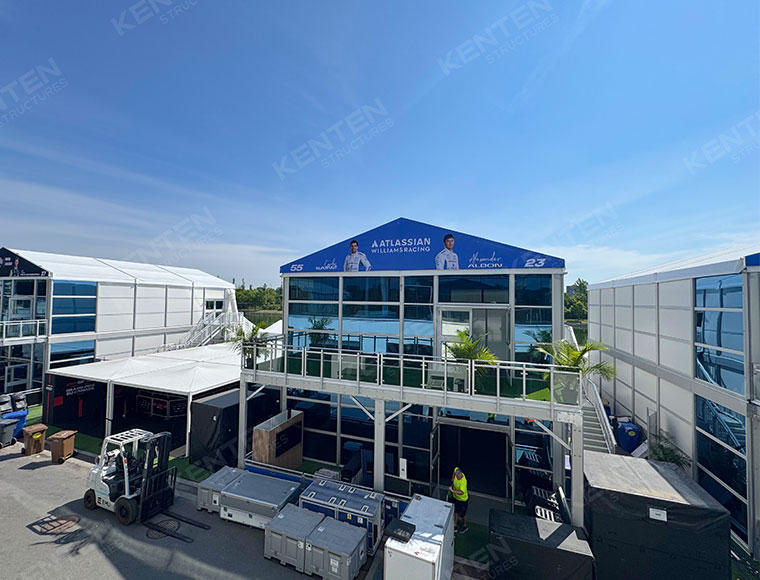

When horizontal expansion is restricted, the solution lies in building upwards.
A double decker aluminum structure tent effectively doubles the usable floor space without increasing the footprint of the foundation.
Standard temporary structures focus on span and length, but multi-story engineering requires a fundamental shift in load-bearing logic.
The core of this system is the hard-pressed extruded aircraft-grade aluminum alloy frame, typically utilizing 6061-T6 or 6082-T6 specifications.
This material provides the necessary strength-to-weight ratio to support a second level while maintaining portability for temporary deployment.
Steel connectors, hot-dip galvanized for corrosion resistance, serve as the critical nodes that transfer the weight of the upper deck down to the ground plates.
One common concern for event planners is the stability of the upper floor when occupied by dozens of VIP guests.
Engineered flooring systems for these structures are designed to handle significant live loads, often ranging from 250 kg/m² to 500 kg/m².
This capacity ensures that even during high-traffic exhibitions or luxury hospitality gatherings, the structural integrity remains uncompromised.
Wind resistance is equally vital, as the increased height creates more surface area for wind pressure.
Most premium units are rated to withstand wind speeds up to 115 MPH, meeting international safety codes like IBC and EN 13782.

Understanding the dimensions is crucial for project planning and site integration.
| Feature | Specification |
|---|---|
| Clear Span Width | 10m to 30m |
| First Floor Side Height | 4.00m |
| Overall Eave Height | 8.00m |
| Frame Material | Aluminum Alloy 6061-T6 / 6082-T6 |
| Second Floor Load | 250 – 500 kg/m² |
| Wind Resistance | 115 MPH (100-110 km/h) |
| Cover Fabric | 850g/m² Flame-Retardant PVC |
In the world of professional motorsport or brand launches, the “experience” is the product.
A double decker aluminum structure tent allows for a clear separation of functional zones.
The ground floor can serve as a high-traffic registration area or a product showroom.
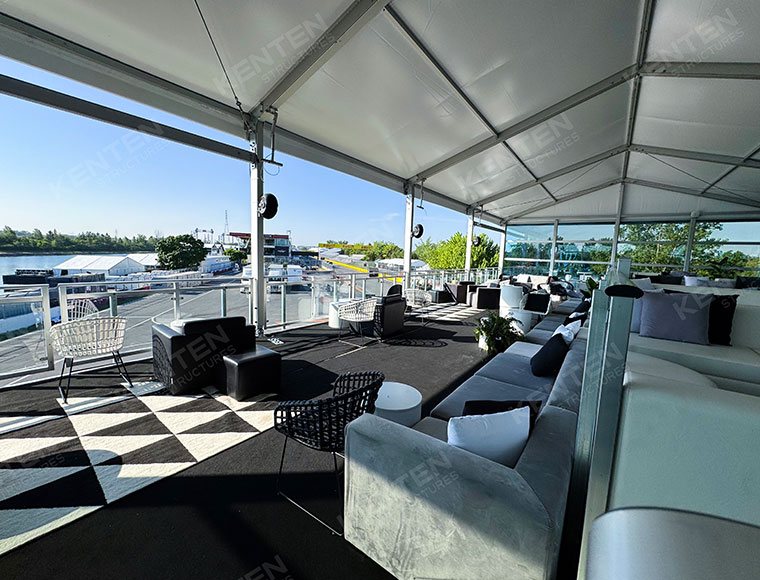
Meanwhile, the upper level provides an exclusive, quiet environment for VIP dining or executive meetings.
This vertical separation creates a tiered guest journey that feels more like a permanent boutique hotel than a temporary tent.

Operating a two-story structure presents unique climate control challenges, as heat naturally rises to the upper level.
Advanced structures integrate HVAC systems specifically designed for multi-story ducting.
Insulated sandwich panels or glass curtain walls replace standard PVC fabric to improve thermal efficiency and acoustic isolation.
Inside, modular flooring and decorative linings hide the structural ribs, transforming the metal skeleton into a high-end interior.
While more complex than a single-story marquee, modular aluminum components allow a trained crew to finish a mid-sized unit in 3 to 5 days.
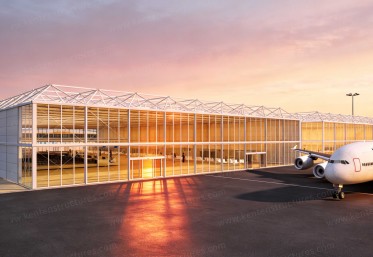
Yes, the 20-year lifespan of the aluminum frame makes them suitable for semi-permanent showrooms or temporary airport terminals.
All covers use 850g/m² PVC that is certified to DIN 4102 B1 and M2 flame-retardancy standards globally.
The choice of a double decker aluminum structure tent is more than a space-saving measure.
It is a statement of capability and an investment in the guest experience that traditional temporary structures simply cannot match.
By leveraging verticality, brands can dominate the skyline of any event while maintaining a compact and efficient ground presence.