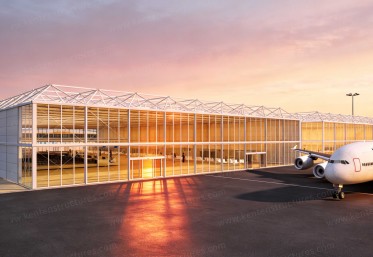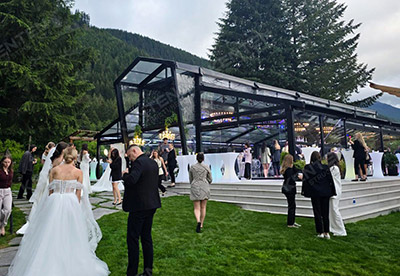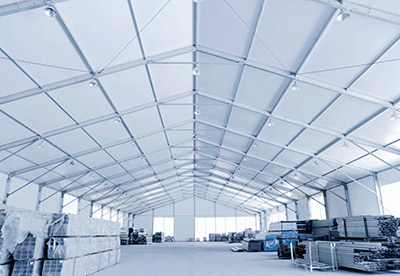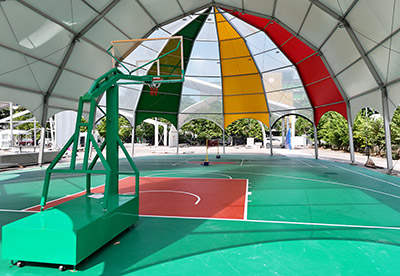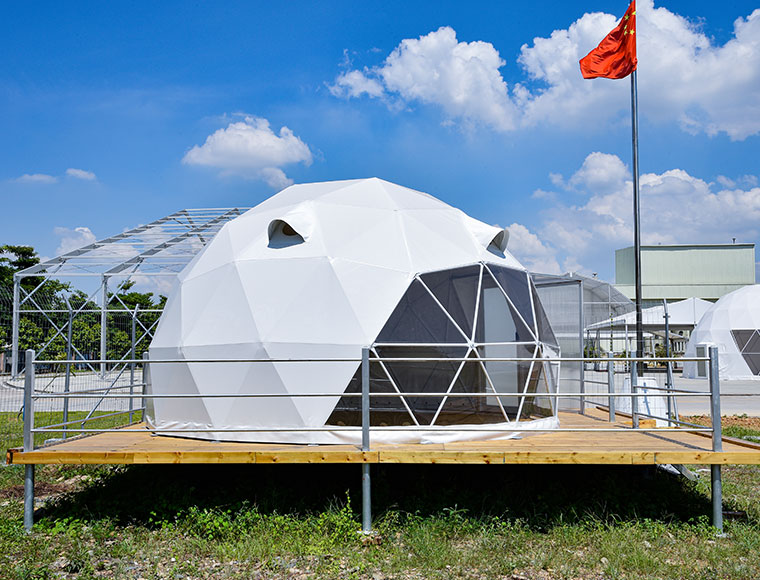

A clear dome tent looks deceptively simple from the outside: a smooth, glowing sphere sitting on a lawn or exhibition floor. What most visitors never notice is the geometry doing the heavy lifting underneath. The clarity people associate with these structures rarely comes from one transparent sheet stretched over the whole dome — it comes from a calculated mix of frame design, fabric selection, and panel placement that lets light in without sacrificing wind resistance.
When buyers search for a clear dome tent, they usually picture something close to a glass greenhouse. In practice, most large-scale dome structures combine opaque PVC panels for the main shell with translucent or fully clear sections around the entrance or roof apex. This isn’t a compromise — it’s how the structure survives real weather while still delivering that panoramic, sky-lit feeling inside.

Every clear or semi-clear dome relies on intersecting steel poles arranged in a geodesic-style grid. Q235 steel is a common choice for this frame because it balances load capacity with weight, and heavier alloys would slow on-site assembly. The lattice spreads stress evenly across the sphere, which is exactly why the fabric between the poles can stay thin or transparent in places without collapsing under tension.
Cover material is where most of the “clear versus solid” decision actually happens. A typical dome tent offers a few practical options, each suited to a different use case.
| Cover Type | Typical Weight | Best For |
|---|---|---|
| Opaque PVC | 800–950 g/m² | Weather protection, branding, climate control |
| Translucent PVC | 650 g/m² | Daylight diffusion, softer interior ambiance |
| Clear panel sections | Localized, entrance/apex only | Visual openness, sightlines, photo backdrops |
Fully transparent domes do exist, but they’re mostly small-scale bubble tents built for glamping, not the kind of clear span structure meant to host trade shows or corporate events. Structural PVC needs enough thickness for waterproofing, UV resistance, and flame retardancy, and thicker material is inherently less transparent.
A dome’s curved shape already reduces wind resistance compared to a flat-walled tent, since air flows around the sphere rather than pushing directly against a vertical surface. That curvature is part of why these structures typically hold up in wind speeds around 80 to 100 km/h once properly anchored with ground stakes, expandable bolts, or weighted plates. Adding large fully clear panels would concentrate stress at the seams, which is why manufacturers usually limit true transparency to smaller, reinforced zones instead of the entire canopy.
The appeal isn’t only visual. Event planners choose these structures because the semi-spherical silhouette photographs well under interior lighting at night, and clear entrance sections let guests glimpse activity inside before walking in — useful for VIP lounges, product launches, and exhibition halls where first impressions matter.
Common placements include:
Diameters typically range from 10m up to 40m, so the same design logic scales from an intimate lounge to a full exhibition hall without changing the underlying engineering approach.
Does a clear dome tent mean the entire structure is see-through?
Rarely. Most clear dome tents combine opaque or translucent PVC across the main shell with clear panels at the entrance or apex, balancing daylight and visibility against weather protection and structural limits.
Is a clear dome tent as durable as a solid one?
Durability depends more on the frame and PVC grade than on transparency alone. A properly engineered dome tent with a Q235 steel frame and flame-retardant PVC coating can offer a service life beyond 15 years, regardless of how much clear paneling it includes.
Can clear panels be added to an existing dome tent?
Some modular systems allow interchangeable panel sections, though this depends on how the original frame and fabric tensioning were designed from the start.
For us, dome tent structures are engineered and certified to meet regional wind and snow load codes, using high-strength steel and aluminum frameworks paired with flame-retardant PVC fabric. Whether a project calls for a fully opaque shell or a clear dome tent with strategic transparent sections, the same structural principles decide how the space performs long after the ribbon-cutting photos are taken.