Home » How KENTEN A-Structure Tent Supports the Temporary Infrastructure of Olympic and Asian Games
How KENTEN A-Structure Tent Supports the Temporary Infrastructure of Olympic and Asian Games
August 14, 2026
The Temporary Infrastructure Behind Major Sporting Events
Major sporting events are often defined by their stadiums, arenas, ski courses, and competition venues. Yet the success of an Olympic or Asian Games operation depends on far more than the spaces where athletes compete.
Around every major venue is an extensive temporary infrastructure network: security checkpoints, accreditation centers, offices, dining facilities, athlete support spaces, logistics warehouses, media workspaces, medical facilities, spectator services, hospitality areas, and climate-controlled support buildings.
These facilities may only be required for a limited period, but they shall perform to demanding operational standards.
This is where modular temporary architecture becomes strategically important.
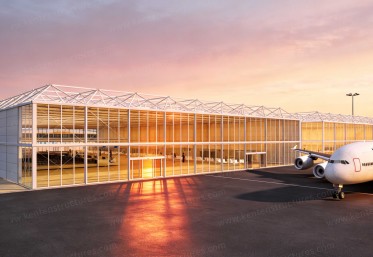
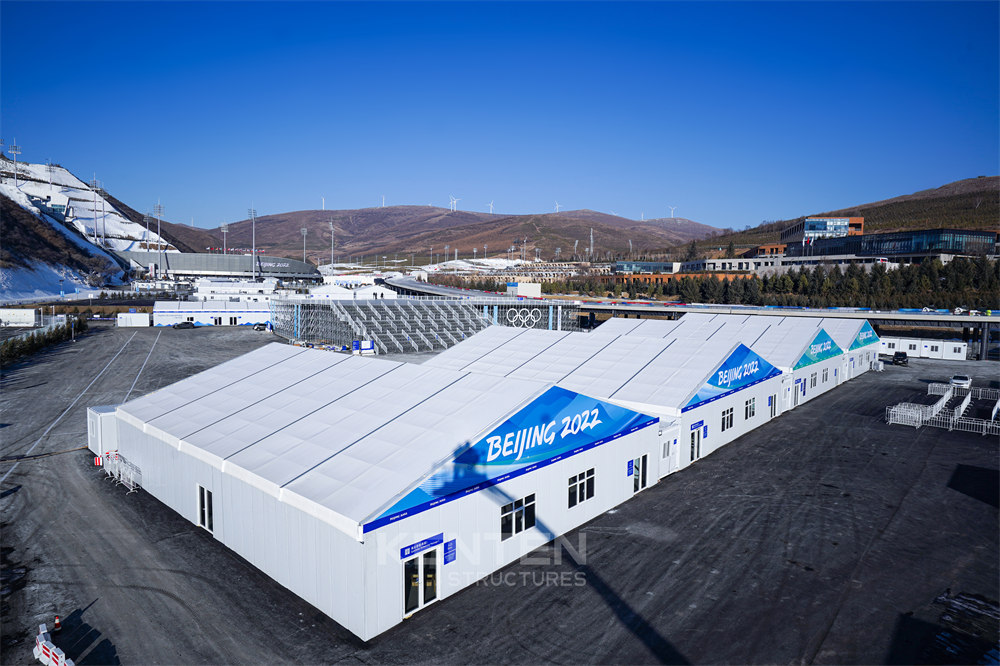
KENTEN A-Structure Tent provides a configurable structural platform for the temporary infrastructure surrounding major international sporting events. Rather than functioning only as event shelter, it can be engineered into enclosed, climate-controlled and operationally specialized facilities for different stages of an event—from preparation and testing to competition and post-event dismantling.
KENTEN A-Structure Tent as a Modular Infrastructure Platform
KENTEN A-Structure Tent is based on an engineered aluminum structural system that can be configured for different dimensions, enclosure requirements and interior functions.
Instead of defining the product by one fixed application, KENTEN approaches the structure as a modular platform.
The same structural principle can support:
Security and access facilities
Accreditation and registration centers
Temporary event offices
Athlete and workforce support spaces
Dining and catering facilities
Spectator services
Hospitality environments
Training and warm-up facilities
Medical support facilities
Media and broadcast workspaces
Storage and logistics facilities
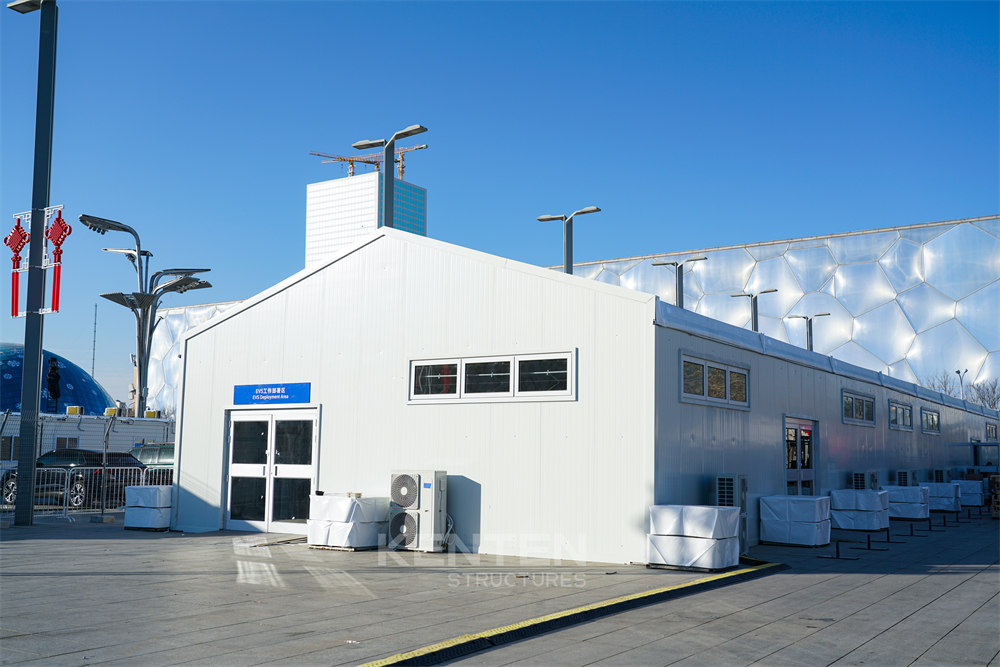
The external structure provides the architectural framework. Internal planning, enclosure systems, flooring, doors, windows, HVAC, lighting, electrical systems and other equipment can then be coordinated around the operational requirements of the project.
1. Security Checkpoints and Controlled Entry
Security is one of the visible forms of temporary infrastructure at a major sporting event.
At entrances to Olympic and Asian Games venues, temporary structures can support: security screening, bag inspection, credential verification, controlled access, queue management and staff operations.
The requirement is not simply protection from sun or rain. The facility shall support predictable pedestrian flow and provide sufficient space for screening equipment, security personnel and controlled entry procedures.
KENTEN A-Structure Tent can be configured as an enclosed security facility or as a covered screening zone, depending on the event’s operational model.
Its modular footprint also allows multiple structures to work together to create parallel screening lanes and organized circulation.
2. Accreditation and Registration Facilities
Thousands of athletes, officials, media representatives, volunteers, contractors and service personnel may require credentials before or during an event.
Temporary accreditation facilities therefore need more than a reception area: waiting areas, verification desks, photography, credential production, collection, or customer service.
KENTEN A-Structure Tent can provide the enclosed footprint needed for this operational sequence while allowing internal partitions and service areas to be configured around expected traffic volumes.
Because these facilities are typically associated with a specific event period, temporary modular construction can provide additional capacity without committing to permanent buildings.
3. Temporary Offices and Event Operations Centers
Behind every major sporting event is a large operational workforce.
Venue managers, technical teams, security coordinators, contractors, volunteers, logistics teams and event administrators may all require workspace close to the venue.
KENTEN A-Structure Tent can be configured as: temporary offices, operations centers, technical offices, volunteer centers or contractor workspaces.
With insulated enclosure systems, controlled access, HVAC, lighting, electrical services and appropriate internal planning, the structure can function as a genuine temporary working environment rather than a basic covered shelter.
This is especially useful when permanent office capacity near a competition venue is limited.
4. Athlete and Workforce Accommodation
Accommodation requirements can extend beyond formal athlete villages.
Remote venues, mountain competition sites and temporary event zones may require additional facilities for workforce, volunteers, technical teams or support personnel.
KENTEN A-Structure Tent can be divided into functional accommodation spaces when combined with appropriate wall systems, flooring, climate control, washroom facilities and internal services.
For winter events, the engineering requirements become even more demanding.
Thermal insulation, controlled entrances, heating, condensation management and weather-resistant enclosure systems become integral to the temporary facility.
The objective is no longer simply to provide shelter.
It is to create a temporary habitable environment suitable for the intended operational period.
5. Dining, Catering and Food Service
Large sporting events create extraordinary food-service demand.
In addition to permanent restaurants, temporary facilities may be required for athlete dining, staff meals, volunteer catering, hospitality, kitchens, food preparation and back-of-house operations.
KENTEN A-Structure Tent can be planned around different catering workflows, integrating: kitchen, preparation, storage, dining, cleaning, and waste handling.
Separate structures can also be connected to create a distributed catering system.
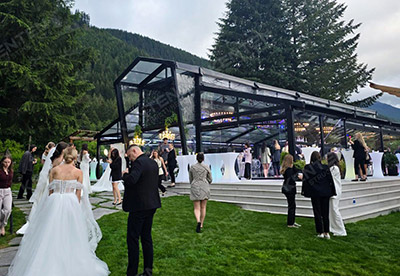
For hospitality applications, the same structural platform can be upgraded with higher-performance glazing, finished interiors, climate control and architectural branding to create a more premium environment.
This demonstrates an important feature of modular architecture:
The structural system can remain standardized while the interior experience changes according to the function.
6. Spectator Services and Fan Zones
Spectators interact with far more spaces than the competition venue itself.
Temporary infrastructure may include information centers, merchandise shops, food and beverage areas, viewing zones, fan experiences, rest areas, lounges and visitor services.
KENTEN A-Structure Tent can be deployed individually or combined into larger event clusters.
Several structures can create a temporary event village containing:
Public viewing
Food and beverage
Merchandise
VIP areas
Information services
Back-of-house support
This creates a more organized spectator environment while allowing capacity to respond to expected attendance and site conditions.
The structure therefore becomes part of the visitor journey rather than simply a background shelter.
7. Training, Warm-Up and Sports Support Facilities
Not every sports-related facility needs to be a permanent stadium or arena.
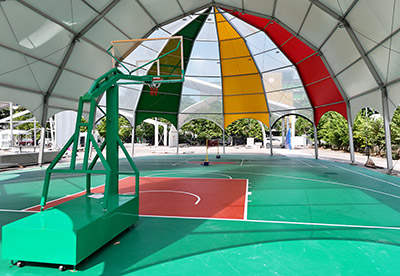
KENTEN A-Structure Tents can provide valuable support capacity for training, warm-up, equipment preparation, changing facilities, team meetings and athlete recovery.
For indoor sports or support activities requiring large unobstructed areas, the clear-span characteristics of an aluminum modular structure can be especially useful.
It provides the additional operational space required to make the overall sports ecosystem function effectively.
8. Medical and Athlete Support Facilities
Major events also require distributed medical and support infrastructure.
Temporary facilities can accommodate first aid, medical screening, treatment, observation, recovery and medical administration.
This can be particularly valuable at remote or temporary venues where permanent healthcare infrastructure is limited.
KENTEN Modular Structure allows critical support facilities to be positioned closer to where they are needed without requiring a permanent building program.
In engineering terms, temporary infrastructure becomes a way of bringing operational capacity to the site rather than moving the site toward existing capacity.
9. Media, Broadcast and Communications Facilities
Modern sporting events depend heavily on media and broadcast operations.
Temporary spaces may be required for press workspaces, interview areas, production offices, technical rooms, media support and broadcast operations.
These facilities require a controlled working environment with reliable access, electricity, lighting, climate control and appropriate internal zoning.
KENTEN A-Structure Tent provides a structural envelope that can be adapted around these requirements.
This enables event organizers to establish temporary media infrastructure near competition venues without constructing a permanent media building.
10. Logistics, Storage and Back-of-House Operations
The important temporary structures are not always visible to spectators.
Behind the event are large volumes of sports equipment, food and beverages, furniture, technical equipment, cleaning supplies, branding materials, security equipment and maintenance inventory.
Temporary warehouses and storage facilities can provide additional capacity when existing buildings cannot absorb the event peak.
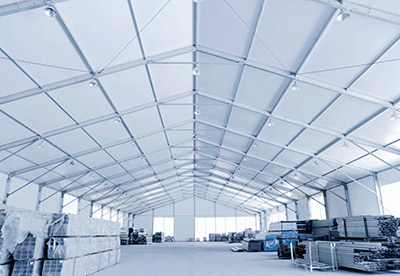
KENTEN A-Structure Tent can therefore support temporary warehousing, equipment storage, distribution areas and back-of-house logistics.
This application connects sporting-event infrastructure with the same capacity-expansion logic increasingly used in industrial and commercial environments.
Summer and Winter Games: Different Conditions, Similar Infrastructure Logic
The temporary infrastructure requirements of summer and winter sporting events are broadly similar, but the environmental engineering can be very different.
Summer events typically place greater emphasis on: solar protection, ventilation, cooling, crowd comfort, shade and high-volume pedestrian circulation.
Winter events introduce additional requirements: thermal insulation, heating, snow-load considerations, weather protection, entrance control and condensation management.
For winter sports venues, these environmental conditions can directly influence the design of security facilities, offices, dining spaces, hospitality areas, athlete support facilities and equipment storage.
KENTEN A-Structure Tent can therefore be configured around different climatic requirements rather than being limited to a single event environment.
KENTEN A-Structure Tent vs. Conventional Temporary Shelter
Comparison
Conventional Temporary Shelter
KENTEN A-Structure Tent
Primary Purpose
Basic covered space
Configurable operational facility
Spatial Planning
Limited
Modular internal planning
Enclosure Options
Basic
Multiple enclosure configurations
Climate Control
Project-dependent
Can be integrated into facility design
Application Range
Short-term shelter
Security, office, dining, sports, logistics and more
Architectural Customization
Limited
Branding, glazing, facade and interior options
Reconfiguration
Limited
Designed around modular adaptation
Lifecycle Potential
Often event-specific
Suitable for reuse and redeployment
The comparison illustrates a broader shift in temporary construction.
The question is no longer simply how fast a temporary building can be installed. The question is how much operational value the structure can deliver during its lifecycle.
Lifecycle: From Temporary Tent to Temporary Infrastructure
Olympic and Asian Games demonstrate why this shift matters.
The stadium is only one component of a much larger operating environment.
A successful event requires infrastructure that supports people, logistics, security, communication, accommodation, hospitality and athlete performance around the competition venue.
KENTEN A-Structure Tent provides a structural foundation for this broader system.
Its modular architecture allows organizers and contractors to adapt the same engineering platform to very different requirements, from high-volume security screening to enclosed dining, temporary offices, athlete support, hospitality and logistics.
For summer events, this means flexible infrastructure that can respond to intense pedestrian activity and changing operational demand.
For winter events, it means the ability to incorporate environmental control and weather-responsive design into temporary facilities deployed in demanding climates.
Build only the infrastructure required, where it is required, for as long as it is required—and design it for reuse whenever possible.
FAQ
Can KENTEN A-Structure Tent be used for Olympic and Asian Games security facilities?
Yes. It can be configured for security screening, controlled entry, credential verification, queue management and related support functions. The final configuration depends on site conditions, operational requirements and local regulations.
Can a KENTEN A-Structure Tent be used as a temporary office?
Yes. With appropriate enclosure, flooring, HVAC, electrical, lighting and internal partition systems, it can be developed into a functional temporary office or event operations facility.
Is KENTEN A-Structure Tent suitable for winter sporting events?
Yes. Subject to project-specific engineering and local environmental requirements. Winter applications can incorporate insulated enclosure systems, heating, controlled entrances and other measures required for cold-weather operation.
Can KENTEN A-Structure Tent be used for dining or hospitality?
Yes. The structure can support temporary dining, catering and hospitality environments. Higher-end applications can integrate glazing, interior finishes, climate control and architectural branding.
Can the same KENTEN A-Structure Tentbe reused after an event?
Yes. KENTEN A-Structure Tent supports dismantling, relocation and reconfiguration, subject to the design and project requirements. This creates opportunities for repeated deployment across different venues and events.
Conclusion: Infrastructure Beyond the Competition Venue
The future of major sporting-event construction is not defined only by larger stadiums.
It is increasingly defined by how efficiently an entire temporary infrastructure ecosystem can be created around them.
Security checkpoints, accreditation facilities, offices, dining halls, athlete support spaces, media centers, logistics warehouses, fan zones and hospitality venues all play a role in the success of a major sporting event.
KENTEN A-Structure Tent provides a modular structural platform for these requirements—bridging the gap between basic temporary shelter and fully operational temporary architecture.
From the winter conditions to the summer requirements, and from the mountain area to the urban environment, the principle remains consistent: the event may be temporary, but the infrastructure still has to perform.
KENTEN develops modular structure systems that help event organizers, infrastructure contractors and venue operators create flexible, engineered space beyond the stadium.


 HIGH-END SERIES
 STRUCTURE TENTS
 ACCESSORIES