Home » What Is a Structure Tent? The Complete Guide to A-Frame Marquees in 2026
What Is a Structure Tent? The Complete Guide to A-Frame Marquees in 2026
June 18, 2026
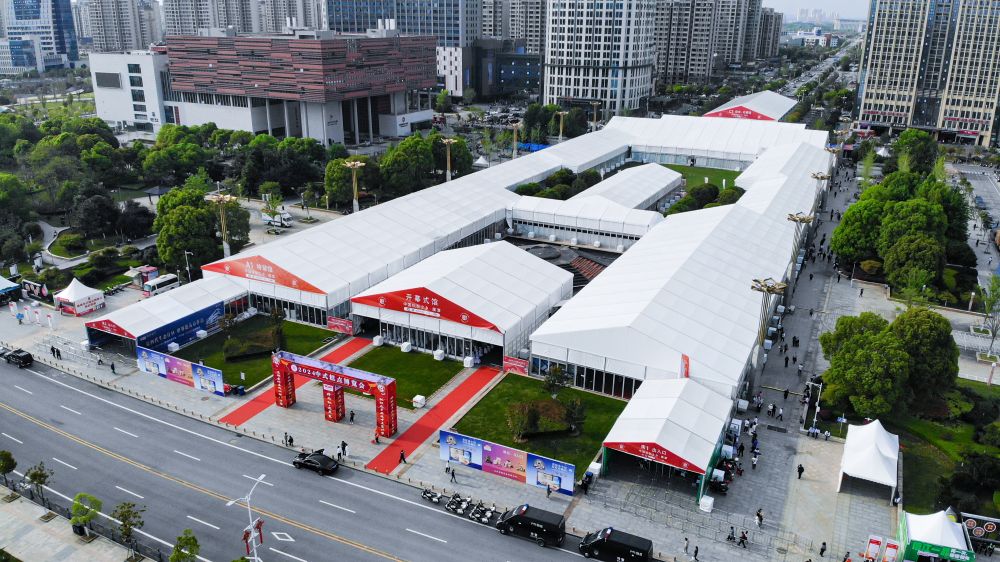
If you have ever walked into an exhibition hall, a wedding venue under canvas, or a warehouse that somehow felt open and impressive at the same time, there is a good chance you were standing inside a structure tent. These are not the popup canopies you pack in a car trunk.A structure tent — sometimes called an A-frame marquee — is an engineered, modular structure built to span large distances without internal columns getting in the way.
That design matters more than most people realise. We looked at what buyers on Reddit and industry forums actually ask before purchasing, and the questions are surprisingly consistent: Will it hold up in wind? Can I customize the walls? How wide can it go? Does it look professional? This guide answers all of that and a few things you probably have not thought to ask yet.
What Exactly Is a Structure Tent?
A structure tent is a rigid-framed tent system built around an aluminium skeleton rather than pole-supported canvas. The defining characteristic is its clear-span capability — the frame transfers all loads to the perimeter supports, which means the interior has zero obstructions. No poles. No guy ropes. Just open space.
The term “A-frame” comes from the distinctive triangular roof profile, which resembles a capital letter A when viewed from the gable end. That shape is not just aesthetic. The peaked roof efficiently sheds rain and snow, which is why structure tents perform reliably in conditions where conventional tents struggle.
Most professional-grade structure tents share three structural traits:
Hard-pressed aluminium alloy frame (typically 6061/T6 grade) — lightweight, corrosion-resistant, and strong enough to span 60 metres or more without interior supports
Modular connector system — individual bay sections bolt together so you can extend or reduce the length depending on your site
Removable side wall options — PVC panels, glass, solid walls, or insulated sandwich panels, depending on whether you need ventilation, aesthetics, or climate control
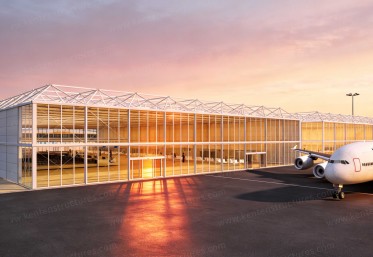
These are not features you find on standard event tents. They are the reason structure tents appear at professional exhibitions, airport terminals, sports venues, and industrial warehouses — places where failure is not an option.
What Can You Actually Use a Structure Tent For?
The honest answer from forum threads and buyer requests is: almost anything that needs a large, weatherproof, column-free space. Here is where structure tents show up most consistently in real-world use.
1. Trade Shows and Exhibitions
Exhibition organisers need uninterrupted floor space for booth layouts, and they need it fast. Structure tents can be erected in days and configured in any length. The open interior allows exhibitors to design their own spaces without working around structural poles. Multiple units can be joined together to create large exhibition halls under a single roof.
2. Corporate and Private Events
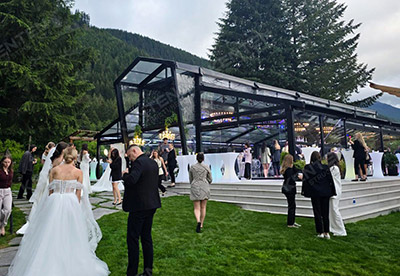
From product launches to gala dinners, a structure tent gives event planners a blank canvas. The aluminium frame accepts lighting rigs, HVAC systems, flooring, and branded wall panels without the compromises that pole tents impose. On Reddit’s r/eventplanning, the recurring complaint about standard tents is “you spend more time working around the poles than arranging the event” — structure tents eliminate that entirely.
3. Industrial and Warehouse Applications
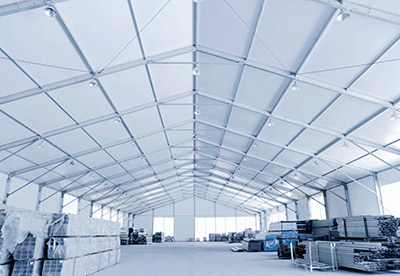
This is where structure tents separate from the event-only market. Industries use them as covered workspace, bulk storage, and equipment shelters. The 60-metre clear span KENTEN’s A Structure Tent offers means an entire crane or loading bay operation can run underneath without columns. Wind resistance up to 140 km/h and temperature tolerance from -30°C to +70°C covers most climate zones.
4. Sports and Emergency Applications
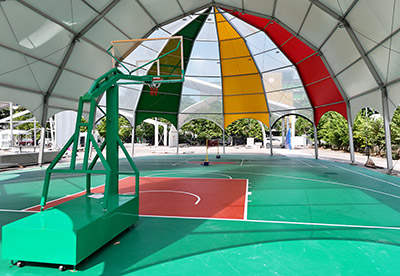
Sports venues use structure tents for covered spectator areas, team facilities, and equipment storage. Emergency response organisations use them as mobile command centres and temporary medical facilities. The rapid assembly and disassembly cycle matters here — a structure tent that can be erected in 48 hours and moved to a new location within a week is operationally valuable.
5. Agriculture
Farm operations use structure tents for covered livestock housing, equipment storage, and crop processing space. The ventilation options and configurable wall systems let farmers balance airflow for animals against weather protection.
Structure Tent vs. Traditional Tent: The Key Differences
If you have been comparing quotes and wondering why a structure tent costs more than a conventional marquee, here is a straightforward breakdown.
Feature
Standard Pole Tent
Structure Tent
Interior supports
Multiple centre poles
Zero — fully clear span
Maximum width
15–20 m typically
60–80 m possible
Wind resistance
Moderate (60–90 km/h)
High (up to 140 km/h)
Assembly time
2–4 hours
1–3 days (modular system)
Customisation
Limited to canvas options
Full wall, floor, and climate control
Reusability
Moderate (canvas degrades)
High (aluminium frame lasts decades)
Professional appearance
Casual to semi-formal
High-end, architectural
The short version: pole tents are faster to set up and cheaper for short-term, low-stakes events. Structure tents are engineered for larger scale, longer term, and higher consequence applications where the space itself needs to perform reliably.
What to Look for When Evaluating a Structure Tent
Not all structure tents are built to the same standard. Based on buyer reviews and industry specifications, here is what actually matters in practice.
Frame Material and Engineering
Look for 6061/T6 anodised aluminium. This grade resists corrosion better than structural steel in outdoor conditions, does not require painting, and weighs roughly one-third of equivalent steel. The anodised finish adds a protective oxide layer that extends service life without maintenance.
Wind and Snow Ratings
Ask for the actual engineering figures, not marketing language. “Wind resistant” is meaningless without km/h numbers. KENTEN’s A Structure Tent is rated to 140 km/h. If you are comparing vendors and they cannot provide certified load calculations, walk away.
Bay Width and Length Flexibility
The clear-span width determines what activities can happen inside. A 15-metre span works for small events and storage. A 30-metre span covers most industrial applications. KENTEN’s A Structure Tent reaches up to 60 metres, which covers large exhibition halls, aircraft hangars, and multi-lane sports facilities without internal columns.
Wall and Flooring Options
This is where professional-grade tents separate from consumer models. Check whether the vendor offers:
Raised flooring systems (for wet or uneven ground)
KENTEN’s A Structure Tent supports all of these options. The ability to mix panel types — solid walls on one side, glass on another — lets you balance cost, climate, and aesthetics within a single structure.
Frequently Asked Questions
What is the difference between a structure tent and a marquee?
A marquee is a general term for a large tent, often used for events. A structure tent is a specific engineering classification — it uses a rigid frame (typically aluminium) to create a clear-span interior, whereas traditional marquees rely on centre poles and guy ropes for support.
How long does it take to install a structure tent?
Assembly time depends on size and ground conditions. A small structure tent (10–15 m wide) typically takes 1–2 days with a trained crew. Large industrial units (40–60 m wide) may require 2–4 days. KENTEN provides on-site assembly supervision and detailed erection manuals.
Can a structure tent be used permanently?
Yes. Unlike rental-event pole tents, aluminium frame structure tents are designed for long-term installation. They are used as permanent warehouse shelters, sports facilities, and industrial workspaces. The aluminium frame has an expected service life of 25+ years with minimal maintenance.
Are structure tents suitable for winter conditions?
Structure tents perform reliably in cold weather when configured correctly. KENTEN’s A Structure Tent is rated from -30°C to +70°C and can be equipped with insulated sandwich panels, raised flooring, and HVAC systems for year-round use in cold climates.
What size structure tent do I need?
A common rule of thumb: allow 1 square metre per person for standing events, 2 square metres per person for seated dining, and factor in stage, bar, or equipment zones separately. For industrial use, calculate the clear span needed for your equipment and workflow, then add 20% margin for operational flexibility. KENTEN offers custom sizing with widths from 3 m to 60 m and unlimited length.
Why KENTEN Structures for Your A Structure Tent?
If you have got this far, you are probably serious about getting the right structure for your project. KENTEN Structures designs and manufactures A Structure Tents for clients across North America, Europe, the Middle East, and Southeast Asia.
If you have a specific project in mind — a 50-metre warehouse shelter, a multi-unit exhibition complex, or a single high-end event tent — KENTEN’s team can scope the configuration, material specifications, and lead time.


 HIGH-END SERIES
 STRUCTURE TENTS
 ACCESSORIES