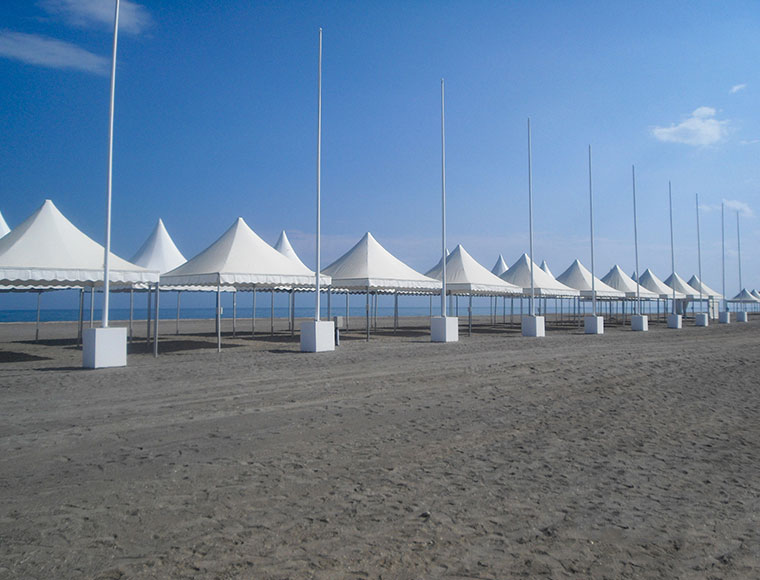

Pagoda Canopy Tent: Engineering Behind the Peak Roof Design

A pagoda canopy tent solves a problem that flat-roof structures rarely address well: how to combine visual distinction with structural reliability in a temporary or semi-permanent format. The pointed roofline isn’t decorative flourish alone — it changes how wind and rain interact with the fabric, which matters more than most planners realize until a storm rolls through mid-event.

The Problem With Generic Event Structures

Standard flat or curved-roof tents often struggle with water pooling and wind uplift, especially at larger spans. Event organizers dealing with unpredictable weather, tight installation windows, or brand-sensitive venues need something that looks intentional and performs under load. A pagoda-style roof addresses both concerns simultaneously by directing rainfall toward the eaves rather than allowing it to collect at a central point.

Frame Engineering and Load Distribution

The structural backbone here is a hard-pressed extruded aluminum alloy frame, typically 6061-T6, connected through hot-dip galvanized steel inserts. This combination isn’t arbitrary. Aluminum alloy in the 6061-T6 grade offers a favorable strength-to-weight ratio, which keeps the frame light enough for a small crew to assemble without cranes, while galvanized steel connectors resist corrosion at the joints — usually the weakest point in any modular frame system over years of outdoor exposure.

The four-channel profile design distributes tension evenly across the roof span, which is part of why these tents can carry a wind resistance rating of 80–100 km/h without excessive flexing. For crews working temporary security checkpoints or press events where downtime isn’t an option, that stability translates directly into fewer weather-related delays.

Clear-Span Interior Without Compromise

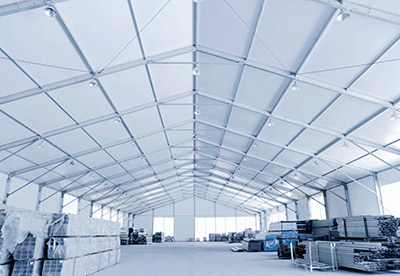
Internal support poles create dead zones. They block sightlines, complicate booth layouts, and limit how furniture or displays can be arranged. The pagoda canopy tent uses a clear-span structural design, meaning the entire footprint — from 3m up to 10m width — remains obstruction-free. For exhibition booths and product showcases, that unobstructed floor area is often the deciding factor over cheaper alternatives with center poles.

Fabric Performance Under Real Conditions

ComponentMaterialWeight
Roof CoverOpaque PVC-coated polyester800–950 g/m²
Side WallTranslucent PVC-coated polyester650 g/m²
Operating Range-30°C to +70°C

Heavier roof fabric isn’t just about durability against tearing. It also blocks UV penetration more effectively, which matters for multi-day outdoor events where fading or degradation would otherwise shorten usable lifespan. The flame-retardant treatment on both roof and wall fabric addresses a separate concern entirely — code compliance for public gatherings, where fire safety standards aren’t optional.

Sizing and Modular Configuration

Because side heights range from 2.5m to 4m and widths scale from 3m to 10m, configurations can be linked together to form larger footprints without redesigning the base structure. This modularity has shown up in practice at large-scale public events, including spectator checkpoint rows at international sporting competitions and clustered courtyard layouts for outdoor exhibitions. The same frame logic that works for a single 3m unit scales into connected rows covering thousands of square meters.

Where These Structures Actually Get Used

The application range is broader than most people assume:

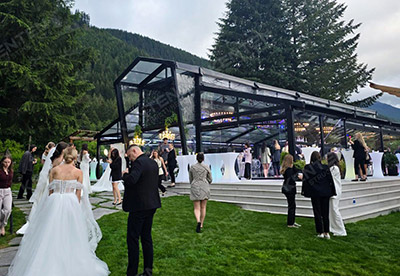
  • Private celebrations and outdoor parties
  • Media and press events
  • Exhibition booths and product showcases
  • Brand promotions and vehicle launch events
  • Temporary security checkpoints
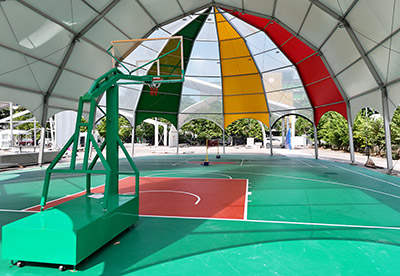
  • Sports event infrastructure and medical stations

Each scenario places different demands on the structure — a medical station tent prioritizes quick side-curtain access, while a brand launch tent prioritizes clean sightlines and interior lighting integration.

Frequently Asked Questions

How long does a pagoda canopy tent take to install?
Because the frame is modular and lightweight, small crews can typically complete assembly without heavy machinery, though exact timing depends on size and site conditions.

Can these tents handle multi-day outdoor exposure?
The PVC fabric is UV-resistant, waterproof, and flame-retardant, and the frame is rated for a service life exceeding 15 years under normal outdoor use.

What’s the practical size range for event use?
Standard widths run from 3m to 10m, with side heights adjustable between 2.5m and 4m depending on interior clearance needs.

Choosing a pagoda canopy tent ultimately comes down to matching structural specifications to the actual site conditions — wind exposure, expected foot traffic, and how long the structure needs to stand. For us, that means treating the peak roof design not as a styling choice but as a functional response to load and drainage, built on aluminum framing that’s been tested against real-world wind and weather demands rather than laboratory assumptions alone.

We'll Help You Sort it Out

Kenten quickly provide full scale solution for you