Is Your Infrastructure Slowing Down Your Supply Chain? The Case for Modular Warehouse Tent

In the modern economy, the biggest bottleneck in logistics isn’t transportation or software—it’s physical infrastructure.

For decades, the goal was simple: build a bigger warehouse and optimize the trucks. But today’s supply chain moves in real-time. With the rise of hyper-fast e-commerce, nearshoring, and volatile demand cycles, the “permanent” warehouse has become a liability. When your business scales in weeks, but your construction project takes years, you don’t have a growth problem—you have an infrastructure lag.

This is why forward-thinking logistics operators are pivoting toward modular infrastructure, specifically high-performance solutions like the KENTEN A-Structure Tent.

The Agility Gap: Why Traditional Warehouses are Failing

Most distribution centers were designed for a slower era. They were built for stability, not agility. While a permanent concrete building is an asset, its rigidity creates several operational risks:

  1. The Construction Lag: By the time a traditional expansion is permitted and built, the market opportunity has often passed.
  2. The Layout Trap: Fixed columns and permanent walls dictate how goods move. If your product line changes, your building becomes an obstacle.
  3. The Disruption Dilemma: Expanding a permanent facility often means construction noise, dust, and safety hazards right in the middle of active operations.

In short: Your supply chain is sprinting, but your building is standing still.

Shifting the Metric: From “Square Footage” to “Operational Flow”

In the past, logistics success was measured by how many square meters you owned. Today, the winning metric is flow.

The most efficient facilities aren’t necessarily the largest; they are the ones that minimize the distance between receiving, staging, and dispatch. Every unnecessary turn or bottleneck adds cost and delays the customer.

How Modular A-Structure Tents Optimize Flow

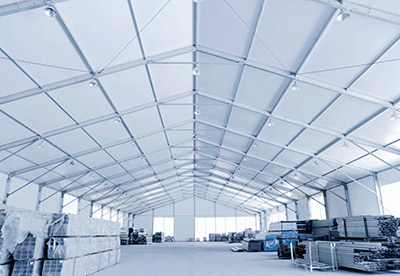
The KENTEN A-Structure Tent solves the “flow” problem through a clear-span design. By eliminating internal support columns, it provides a completely unobstructed interior. This allows managers to:

  • Reconfigure layouts instantly as seasonal demands shift.
  • Optimize sorting and packaging paths without structural constraints.
  • Scale the footprint modularly as volume increases.

Strategic Advantages of Modular Logistics Infrastructure

1. Rapid Deployment Without Downtime

The most significant advantage of a modular system is the ability to add capacity adjacent to existing operations. You can deploy a full-scale logistics hub next to your factory or warehouse without pausing a single production line.

2. Versatility Across the Supply Chain

A modular structure isn’t just “extra storage.” Depending on your current bottleneck, it can be configured as:

  • Cross-Docking Hubs: For rapid transfer of goods with minimal storage time.
  • E-commerce Fulfillment Centers: To handle sudden peaks in B2C orders.
  • Industrial Staging Areas: For large-scale manufacturing components.
  • Regional Distribution Nodes: To test new markets without committing to a 20-year lease.

3. Industrial-Grade Functionality

Modern modular tents are no longer “temporary shelters.” The KENTEN A-Structure is engineered for industrial use, integrating seamlessly with:

  • HVAC and Climate Control for sensitive cargo.
  • Advanced Lighting and Electrical grids for 24/7 operations.
  • Loading Dock Interfaces for streamlined truck turnaround.
  • Fire Protection and Security systems to meet insurance and safety standards.

Comparison: Modular vs. Traditional Construction

FeatureKENTEN A-Structure TentTraditional Warehouse
Deployment SpeedDays to WeeksMonths to Years
Interior Space100% Clear-Span (No Columns)Fixed Columns/Walls
ScalabilityModular & ExpandableDifficult & Costly
Operational ImpactZero DisruptionHigh Construction Impact
Capital RiskLow (Flexible Asset)High (Fixed Asset)

The Bottom Line: Infrastructure as a Competitive Advantage

The future of logistics belongs to the responsive. When a new contract arrives or a global shift in sourcing occurs, the company that can create 10,000 square meters of operational space in a week will outperform the company waiting for a construction crew.

Competitive advantage is no longer about who owns the most land—it’s about who can adapt their space the fastest.

Frequently Asked Questions

Can a modular A-Structure tent actually replace a permanent warehouse?

While permanent buildings have their place, modular structures can serve as long-term operational hubs. They are built with industrial-grade aluminum and weather-resistant fabrics designed for durability and long-term use.

Can I connect these structures to my existing building?

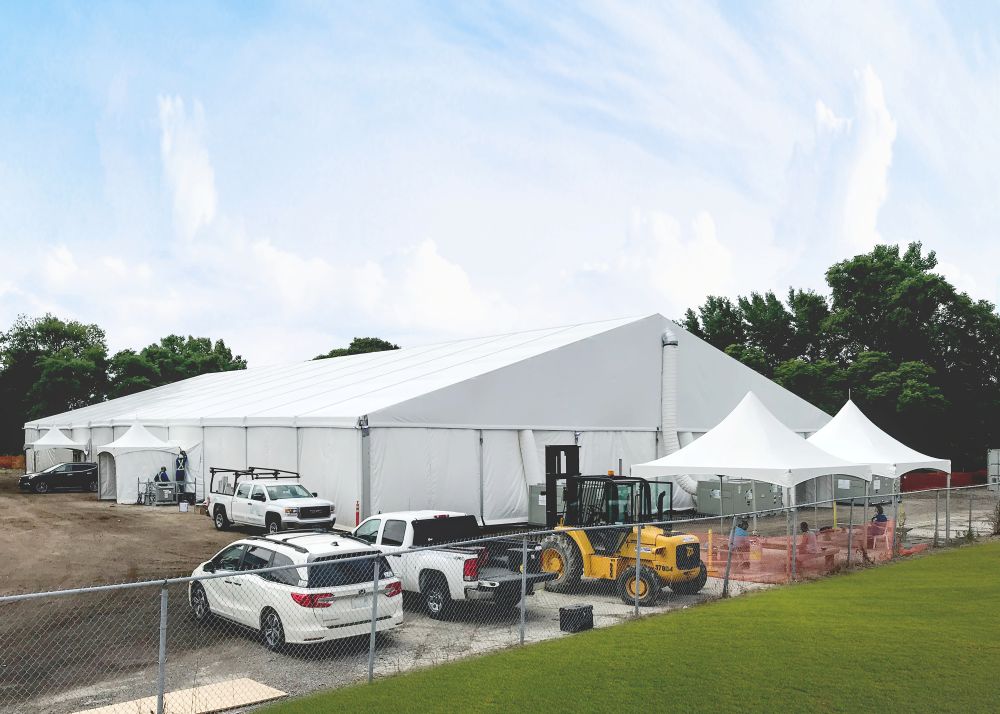
Yes. One of the primary uses of the KENTEN system is as an “operational extension,” attaching directly to existing factories or warehouses to expand the workflow without moving the entire operation.

Is it safe for heavy industrial equipment?

Absolutely. Because the interior is clear-span, it is ideal for forklifts, automated guided vehicles (AGVs), and heavy racking systems that require wide turning radii and high ceilings.

We'll Help You Sort it Out

Kenten quickly provide full scale solution for you