Home » Inside KENTEN Structures: From Factory Loading to Global Infrastructure Delivery
Inside KENTEN Structures: From Factory Loading to Global Infrastructure Delivery
August 19, 2026
From a Factory to a Project Site Thousands of Kilometers Away
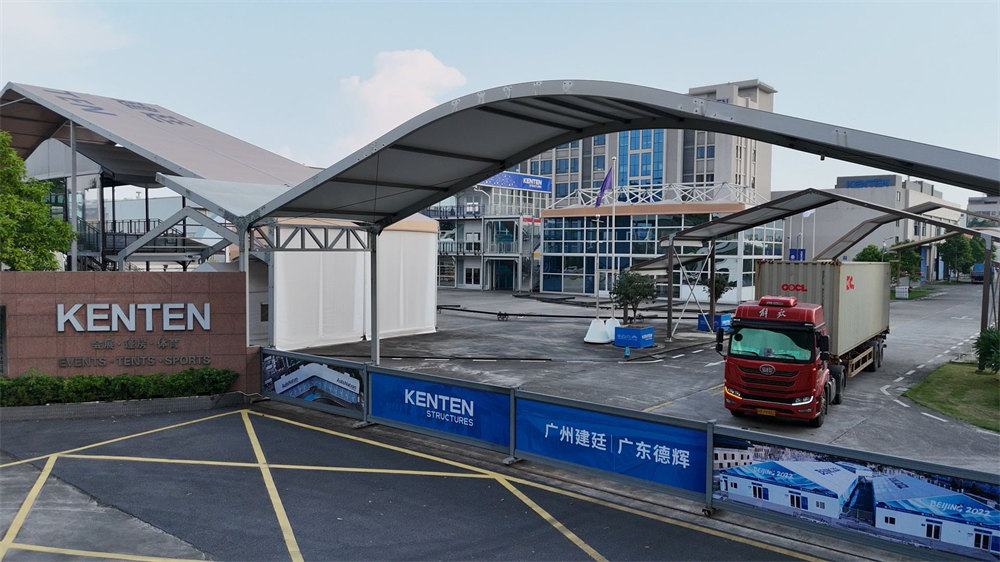
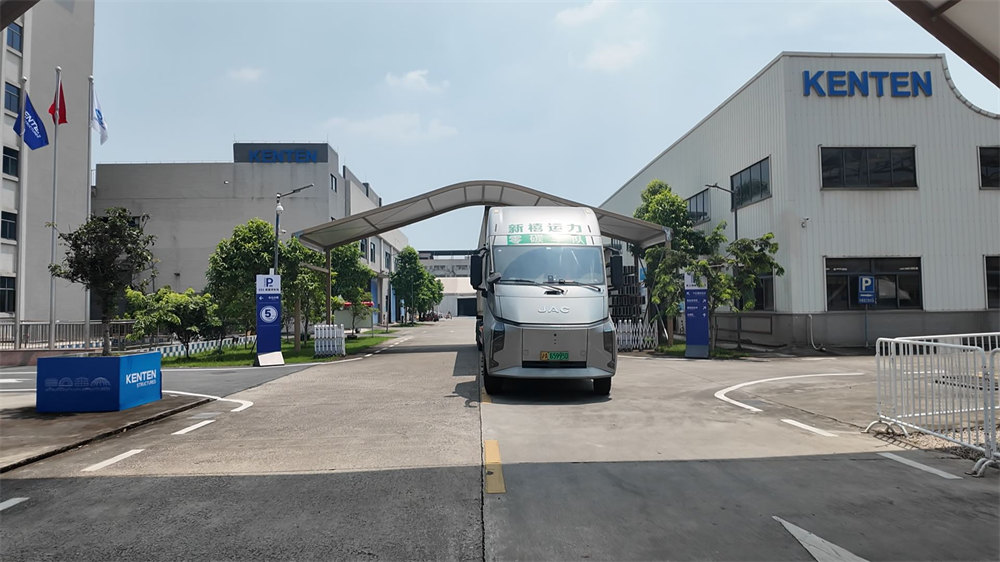
Containers leave the manufacturing center of KENTEN Structures.
They are on their ways to building sites around the world.
Inside it are aluminum structural components, building systems and carefully prepared project materials. On the surface, it may look like another international shipment leaving a manufacturing facility.
But for modular infrastructure, the journey is far more significant than that.
What is inside the container is not simply a collection of products.
It is a future building system.
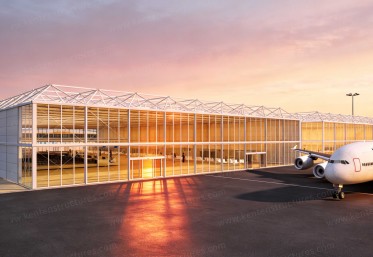
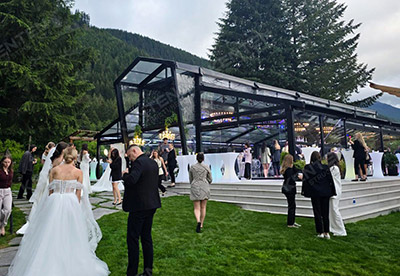
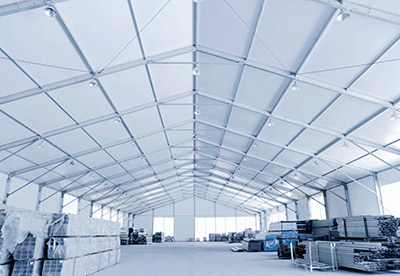
Thousands of kilometers away, those components may become an aircraft hangar, an event venue, a sports facility, an exhibition space, a hospitality structure, a warehouse or another purpose-built infrastructure environment.
Between the factory and that final destination is a complex chain of engineering, manufacturing, quality control, packaging, loading, transportation, unloading and installation.
This is why, at KENTEN Structures, the factory loading process is more than a logistics operation.
It is part of infrastructure delivery.
As a leading modular structure manufacturer serving international markets, the ability to move a structure efficiently from factory to project site is not an afterthought. It is part of the engineering system itself.
A Modular Structure Has Two Lives: Before the Site and On the Site
Most people experience a building after it has been completed.
They see the roof, the facade, the interior space and the activities taking place inside.
The manufacturing process behind it is largely invisible.
Modular infrastructure is different.
A significant part of the building’s physical journey takes place before the structure reaches the project site.
Components are engineered and manufactured in a controlled factory environment. They are prepared for transportation, organized for loading and then moved through an international logistics chain before eventually arriving at the location where they will be assembled.
This changes the way infrastructure needs to be considered.
The project does not simply have a construction site.
It effectively has an extended delivery environment:
The factory of KENTEN Structures is therefore not separate from the project.
The factory is part of the project.
This principle is becoming increasingly important across modern off-site construction. Industry guidance and current KENTEN Modular Structure practice emphasize the integration of design, manufacturing, logistics and installation because decisions made in one stage can directly affect the next.
The Factory Is Where Infrastructure Starts Becoming Real
An architectural drawing represents an idea.
A structural calculation represents engineering logic.
A production drawing translates that logic into manufacturable components.
But it is inside the factory that the infrastructure begins to take physical form.
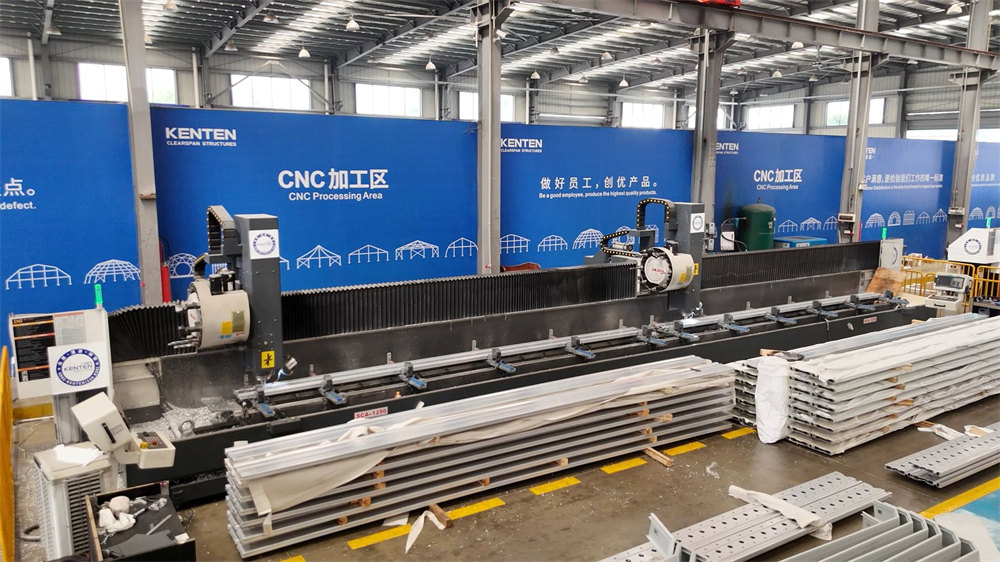
For KENTEN Structures, this means transforming project requirements into a coordinated system of structural members, connections, roofing, wall systems, flooring and other components.
The scale of this process can be easy to underestimate.
A large modular structure is not one product.
It is an engineered assembly of many components that must eventually work together as one building system.
Every component therefore has to make sense in relation to the final structure.
Its dimensions matter.
Its connection method matters.
Its packaging matters.
Its handling requirements matter.
And ultimately, its position within the shipment matters.
This is one of the fundamental characteristics of modular infrastructure:
The building is designed as a system, but it travels as a collection of coordinated components.
The factory of KENTEN Structures is where those two realities meet.
From Production Line to Shipment-Ready Infrastructure
Before a container can leave the factory of KENTEN Structures, the project has to become transport-ready.
This requires more than completing production.
Components need to be organized, prepared and protected for their next environment.
For international projects, that environment can change several times:
Factory → Truck → Container → Port → Ocean Freight → Destination Port → Inland Transportation → Project Site
Every transition introduces handling.
Every handling stage introduces potential risk.
Every additional movement makes organization more important.
This is why shipment preparation should be viewed as an extension of manufacturing rather than a completely separate activity.
The objective is not simply to place finished components into a container.
The objective is to create a shipment that can travel through the logistics chain and arrive ready for the next stage of the project.
That means considering component protection, packaging, identification, handling and loading sequence as part of overall delivery readiness.
Container Loading Is More Than Filling Available Space
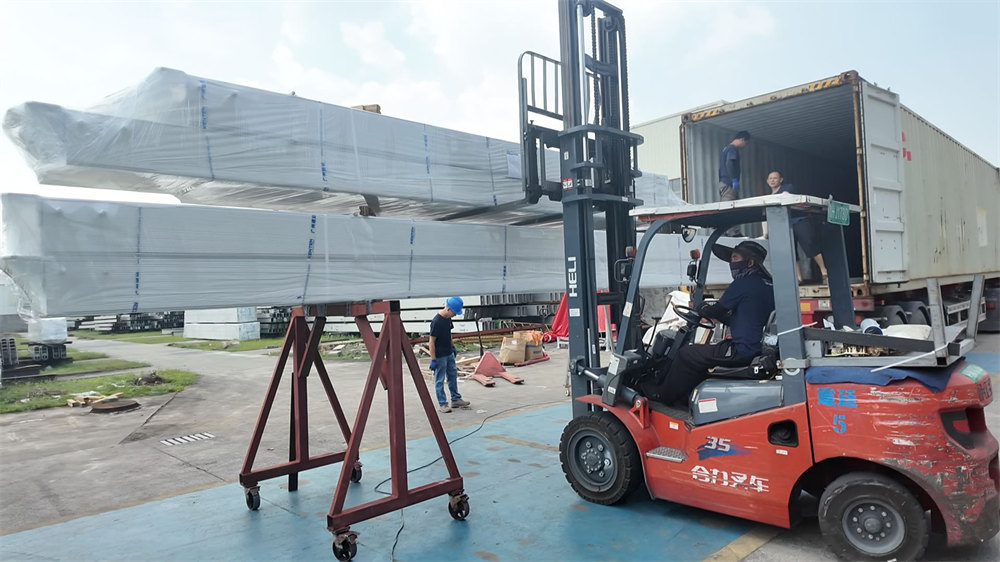
This is where the visual story of loading process inside the manufacturing center of KENTEN Structures becomes particularly meaningful.
A container has a fixed physical volume.
A project has a defined quantity of components with different dimensions, geometries and handling requirements.
The challenge is to connect the two.
A successful loading operation therefore needs to answer several questions:
How should components be arranged?
How can available container space be used efficiently?
How can components be protected during transportation?
How can loading and unloading remain practical?
How can the shipment remain organized when it reaches the project site?
These are logistics questions, but they are also engineering questions.
For KENTEN Modular Structure, transportation is closely connected to design and manufacturing because the physical characteristics of components influence how they can be moved, handled and installed. Industry research and practice repeatedly identify logistics as a critical link between off-site production and on-site assembly.
This means that a well-loaded container is not simply a container with a high utilization rate.
It is a container organized around the needs of the project.
Loading Efficiency Is Also Project Efficiency
The consequences of factory loading extend far beyond the factory gate.
Every additional shipment requires transportation, handling, coordination and time.
For international projects, these variables can have a direct impact on project logistics and commercial performance.
A poorly coordinated delivery process can create additional:
Transportation requirements
Handling operations
Storage needs
Site congestion
Sorting work
Installation delays
A coordinated delivery strategy works in the opposite direction.
The objective is to make the transition from factory to project site as predictable as possible.
This is particularly important for modular infrastructure because the value of off-site manufacturing depends on what happens after manufacturing as well.
A factory can produce components efficiently, but if those components are difficult to transport, difficult to stage or difficult to identify at the destination, part of the expected efficiency is lost.
KENTEN Modular Structure therefore presents a delivery system, not simply a manufacturing method.
The Container Is a Temporary Project Environment
There is another way to look at a loaded container.
It is not only a transportation unit.
For a period of time, it becomes a temporary environment for the project itself.
Inside the container are components that will eventually occupy specific positions within the completed structure.
The structural system may eventually span a large open space.
The facade may eventually define the building’s appearance.
The roof system may eventually create the weather-protected environment.
The flooring system may eventually support people, equipment and operations.
But before any of these functions exist, every component has to survive the journey from factory to site.
This creates a simple but powerful idea:
The infrastructure has already started moving before it has started standing.
That is one of the defining characteristics of KENTEN Modular Structure.
From Factory Loading to Site Installation
The journey does not end when the container reaches its destination.
The next challenge is turning transported components into an operational structure.
This is where factory preparation connects directly with site execution.
At the destination, components need to be unloaded, organized, staged and assembled.
The relationship can be visualized as:
Factory Preparation
Container Loading
International Transportation
Site Unloading
Component Staging
Structural Assembly
Operational Infrastructure
The more effectively these stages are coordinated, the easier it becomes to move from manufacturing to construction.
Current practices increasingly emphasize this connection. Transportation, delivery sequencing, site access and installation need to be considered together rather than managed as isolated activities.
For KENTEN Structures, this is particularly relevant because KENTEN Modular Structures are often deployed in environments where schedule, accessibility and operational readiness matter.
A structure may be required for a major event.
It may support an industrial operation.
It may provide temporary commercial capacity.
It may serve as an aircraft maintenance facility.
The building may be temporary, semi-permanent or designed for repeated deployment.
In each case, delivery is part of the operational equation.
Engineering for a Global Supply Chain
A local building project and an internationally delivered modular structure do not face exactly the same logistics environment.
A structure manufactured in one country may ultimately operate on another continent.
The distance can be thousands of kilometers.
The shipment may pass through multiple transportation modes and handling points.
This creates a different engineering perspective.
The question is no longer simply:
Can we manufacture the structure?
It becomes:
Can we manufacture, prepare, transport and deploy the structure as a coordinated system?
This is why international modular infrastructure requires a broader definition of engineering capability.
Manufacturing capability matters.
Structural engineering matters.
Material selection matters.
But so do packaging, loading, transportation coordination and site deployment.
In off-site construction, logistics can impose practical constraints on module dimensions, transportation methods, route conditions and site access, making early coordination essential.
The factory of KENTEN Structures is therefore connected to a much larger geography.
Its loading area is effectively the starting point of a global infrastructure supply chain.
What Factory Loading Reveals About a Manufacturer
A finished structure can look impressive.
A completed project can look even more impressive.
But factory operations reveal something different.
They show how the company actually works.
A loading video captures a moment that is easy to overlook:
Forklifts moving components.
Workers preparing shipments.
Structural members being organized.
Containers being positioned.
Materials moving from production areas toward transportation.
These are ordinary factory activities.
But together, they provide evidence of something much larger:
Production capacity.
Project coordination.
Material organization.
Delivery readiness.
International supply capability.
This is why loading process inside the manufacturing center of KENTEN Structures deserves to be shown.
It makes an otherwise invisible part of the infrastructure lifecycle visible.
Instead of only showing what the structure looks like after completion, it shows where the structure comes from and how it begins its journey.
From Containers to Global Infrastructures
At the manufacturing center of KENTEN Structures:
Containers.
Aluminum components.
Packaging.
Forklifts.
Loading operations.
At the project sites:
Functioning KENTEN Modular Structures.
Protected interior environments.
People occupying the space.
Equipment operating inside.
Events taking place.
Aircraft being serviced.
Products being displayed.
Businesses continuing their operations.
The physical distance between these two images may be thousands of kilometers.
But engineering connects them.
This is the deeper meaning of KENTEN Modular Structure.
The structure is designed to move without losing its identity as a building system.
Its components may travel separately, but they are ultimately designed to become one coordinated structure.
That creates a different relationship between manufacturing and construction.
The factory does not simply produce something that will later be used on a project.
The factory produces part of the project itself.
Why Delivery Capability Matters More as Infrastructure Becomes More Flexible
Modern infrastructure is increasingly required to respond to changing operational conditions.
Event organizers may need temporary venues.
Industrial companies may need additional covered space.
Airports and aviation operators may require maintenance capacity.
Sports organizations may need hospitality or support facilities.
Commercial operators may need additional space without committing immediately to permanent construction.
In these environments, infrastructure value is not determined only by structural performance.
It is also influenced by:
How quickly it can be deployed.
How efficiently it can be transported.
How easily it can be adapted.
How effectively it can support changing operational requirements.
This is why modular infrastructure is increasingly viewed as a delivery strategy rather than simply an alternative building form. Recent industry perspectives describe modular construction as a delivery method shaped by schedule, site conditions, labor availability and operational requirements, rather than as a single building type.
The ability to manufacture and deliver modular structures internationally therefore becomes part of their strategic value.
KENTEN Structures: Engineering the Journey, Not Just the Structure
For KENTEN Structures, the journey from factory to project site represents a broader approach to modular infrastructure.
It begins with engineering.
It continues through manufacturing.
It moves into quality preparation and shipment organization.
It passes through transportation and logistics.
And it ultimately becomes real infrastructure through site assembly.
The visible structure is only the final expression of this process.
Behind it is a connected chain of decisions and operations.
That is why KENTEN Structures views factory loading not as the last step of manufacturing, but as one of the first visible steps of global infrastructure delivery.
A container leaving the factory represents a transition:
From engineered components to a future building.
From manufacturing to deployment.
From factory operations to project operations.
From one location to another.
And ultimately:
From infrastructure on paper to infrastructure in the real world.
The Journey Continues Beyond the Factory Gate
The important moment in a loading process is the moment when the container leaves the manufacturing center of KENTEN Structured.
Because at that point, KENTEN Modular Structure begins a new phase of its lifecycle.
The factory has completed its part of the journey.
The logistics network takes over.
The project site becomes the next destination.
And eventually, the components that once occupied a container will stand together as a functioning infrastructure system.
That is the story behind every shipment.
Not simply what is being shipped, but what that shipment is becoming.
For KENTEN Structures, the answer is modular structure designed to move from manufacturing environments to real-world applications across global markets.
From factory loading to global infrastructure delivery, every project is a journey from engineered components to operational space.


 HIGH-END SERIES
 STRUCTURE TENTS
 ACCESSORIES