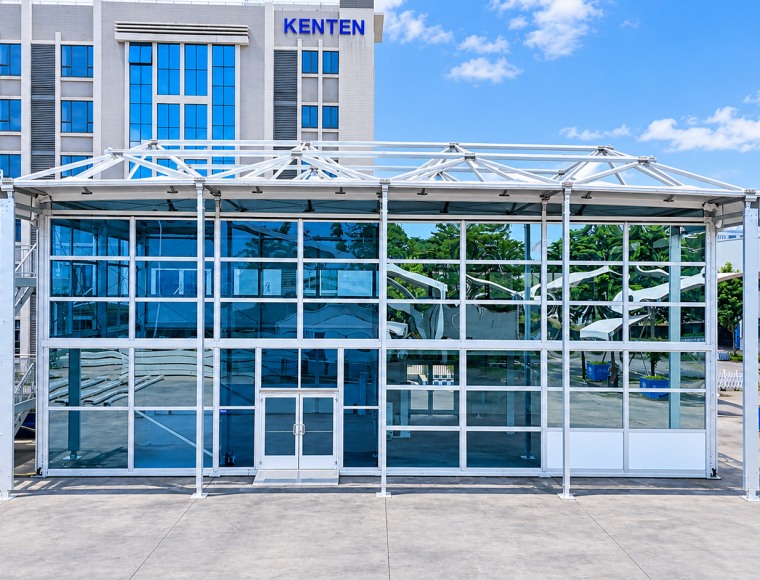
Home » From Infrastructure to Broadcast: Planning KENTEN Pyramid Structure for Live Event Production
From Infrastructure to Broadcast: Planning KENTEN Pyramid Structure for Live Event Production
November 19, 2026
Introduction: Live Event Production Requires More Than a Venue
Live sports competitions, outdoor festivals, international exhibitions, and large-scale entertainment programs increasingly depend on complex production systems to deliver content to audiences both on-site and around the world. Behind every successful live broadcast is a coordinated infrastructure network involving camera positions, production workspaces, lighting, power distribution, audiovisual equipment, communications, and technical personnel. In this environment, modular event structures can play an important role in providing the physical space and engineering foundation required for professional live event production.
The requirements of modern broadcasting extend well beyond installing cameras and setting up a control desk. Production teams need clearly organized working areas, appropriate equipment access, protected cable routes, reliable environmental conditions, and sufficient space for different technical functions to operate simultaneously. These requirements become particularly important at temporary venues, where permanent broadcast facilities may be limited or unavailable.
KENTEN Pyramid Structure offers a modular architectural solution that can be considered for a range of event and infrastructure applications, including sports competitions, exhibitions, cultural programs, and large-scale public events. Its potential role in live production is not limited to providing enclosed space. When incorporated into an integrated project plan, it can serve as part of a broader infrastructure arrangement supporting production teams, media operations, technical equipment, and event-related functions.
The Growing Importance of Technical Infrastructure in Live Events
The commercial value of live events increasingly extends beyond the physical audience attending a venue. A sporting competition may be watched through international television coverage, digital streaming platforms, social media, and post-event content distribution. An exhibition or cultural program may also rely on professional video production to reach remote audiences and support its wider communications strategy.
Broadcasting and media operations require several interconnected facilities. Depending on the scale and format of an event, these may include camera positions, commentary areas, production control rooms, equipment storage, media workspaces, interview areas, technical offices, and external broadcast compounds.
These facilities have different spatial and operational requirements. A camera operator needs an unobstructed filming position and sufficient room for equipment. A production team requires a controlled workspace for monitoring and coordinating live content. Technical personnel need accessible power and data connections, while equipment storage areas shall support secure handling and efficient access.
KENTEN Pyramid Structure: A Modular Foundation for Event Production Environments
KENTEN Pyramid Structure is designed for applications where architectural identity, functional adaptability, and modular configuration are important considerations.
Its potential applications extend across exhibition facilities, cultural venues, sports-related infrastructure, commercial spaces, and temporary event environments. This versatility makes it relevant to projects that require more than conventional event coverage.
For live event production, KENTEN Pyramid Structure can be considered as part of a dedicated infrastructure plan supporting several functions.
Production offices and technical coordination workspaces.
Media working and equipment preparation areas.
Interview, presentation, and press-related spaces.
Technical storage and support facilities.
Event-related hospitality and operational functions.
Dedicated spaces associated with sports and entertainment production.
KENTEN Pyramid Structure provides a potential architectural and structural framework within which these functions can be planned.
This approach allows event developers to consider the structure as part of the complete production environment rather than as an isolated building product.
Planning the Production Environment Around Functional Zones
One of the important steps in developing a production-ready event environment is identifying how different teams and activities will interact.
Broadcast operations rarely take place in a single room. They involve multiple working areas connected through equipment movement, communications, technical infrastructure, and personnel circulation.
For a temporary or semi-permanent KENTEN Pyramid Structure, organizing these functions into clearly defined zones can improve coordination and reduce operational conflicts.
Production and Technical Control Areas
Production control spaces are central to the coordination of live content. These areas may accommodate directors, technical operators, vision mixers, audio personnel, graphics teams, and monitoring equipment.
The spatial arrangement should account for the required equipment footprint, operator workstations, display systems, ventilation, lighting conditions, and access to power and network connections.
Where production control facilities are located within a KENTEN Pyramid Structure, the internal layout should be developed around the actual equipment and personnel requirements rather than relying on a generic office arrangement.
For larger productions, it may be more practical to separate control functions from equipment preparation, storage, and general administrative workspaces.
This reduces unnecessary movement through critical operating areas and allows production personnel to maintain a more organized working environment.
Media Workspaces and Equipment Preparation
Media personnel often need dedicated facilities for preparing equipment, reviewing content, coordinating assignments, and managing materials throughout an event.
A temporary media workspace may include desks, equipment storage, charging stations, network connections, and designated access routes.
For sporting events and international competitions, these functions may also need to coordinate with commentary positions, photography areas, press conference facilities, and mixed-zone operations.
KENTEN Pyramid Structure can be planned to accommodate these functions as part of a wider event infrastructure layout.
Its modular configuration provides an opportunity to organize different working areas within a dedicated structure, subject to the dimensions and internal arrangement selected for the project.
Interview and Presentation Environments
Live interviews, press briefings, sponsor presentations, and event-related media activities require a different spatial arrangement from general production offices.
These spaces need to consider camera framing, background presentation, lighting positions, acoustic conditions, participant seating, and access for technical crews.
A dedicated interview or presentation area within a KENTEN Pyramid Structure can provide a controlled environment for these activities, particularly when the main competition or performance venue does not have sufficient permanent facilities.
The arrangement should also allow equipment installation and removal without interfering with other operational functions.
For projects involving sponsor branding or competition-specific visual identity, the interior environment can be coordinated with the event’s presentation requirements.
Technical Storage and Equipment Support
Live production involves substantial quantities of equipment, including cameras, tripods, monitors, cables, lighting accessories, communication devices, and supporting hardware.
A well-planned support area considers equipment security, access control, loading and unloading routes, temporary work surfaces, and the separation of storage activities from occupied working areas.
The available space should be determined by the actual production inventory rather than estimated solely from the number of personnel.
For event organizers, this is an important distinction because insufficient equipment support space can create congestion in otherwise functional production facilities.
Camera Positions and Structural Planning: Connecting Sightlines with Engineering
Camera positioning is one of the technically sensitive aspects of live event infrastructure.
A successful camera location shall provide the required filming angle while allowing operators to work safely and equipment to be installed, operated, and removed efficiently.
The position also needs to be coordinated with spectator sightlines, event activity, lighting conditions, access routes, and the surrounding structural environment.
For temporary sports venues and outdoor competitions, camera requirements should be identified early in the planning process.
Where elevated camera positions or technical platforms are required, their structural design shall account for the combined loads from equipment, operators, supporting components, and applicable environmental conditions.
It is particularly important not to assume that a roof structure can support additional camera equipment, suspended lighting, or production rigging simply because the structure has sufficient overall dimensions.
Any additional loads shall be evaluated against the approved structural design. Their locations, load transfer mechanisms, connections, and effects on the overall stability of the system should be reviewed by the responsible structural engineer.
For KENTEN Pyramid Structure projects, this means that broadcast-related requirements should be incorporated into the structural planning process from the beginning rather than introduced after the main structure has already been designed.
Power Distribution, Data Connectivity, and Cable Management
Cameras, monitors, lighting equipment, production consoles, wireless systems, and network devices all require appropriate power and connectivity arrangements. The reliability of these systems directly affects the ability of production teams to operate throughout an event.
For KENTEN Pyramid Structure, these requirements should be considered alongside the structural and spatial layout.
Power distribution
Production equipment may have different power requirements, and the distribution arrangement should be developed according to the equipment schedule and overall electrical design.
Dedicated distribution areas, accessible shutdown points, appropriate circuit protection, and separation of equipment zones should be considered by qualified electrical professionals.
Network and data connectivity
Live broadcasting and streaming depend on reliable communication links between cameras, production control areas, media workspaces, and external transmission systems.
The required network architecture will depend on the production format, including whether the event uses local production control, remote production, cloud-based workflows, or a combination of these arrangements.
KENTEN Pyramid Structure allows suitable routes and access points for network infrastructure without creating unnecessary interference with pedestrian circulation or equipment movement.
Cable routing and protection
Cables frequently connect areas that are physically separated, such as camera positions, production control rooms, lighting installations, and technical compounds.
For outdoor events, additional consideration should be given to moisture protection, ground conditions, and exposure to environmental factors.
Lighting, Environmental Control, and Interior Conditions
A professional production environment requires more than adequate floor space and electrical connections.
Lighting is a particularly important consideration.
Production workspaces may require controlled general illumination, while interview and presentation areas need lighting arrangements suitable for the intended camera setup.
Environmental control is equally important.
Production equipment may generate heat, and enclosed workspaces can experience changing internal temperatures depending on occupancy, equipment loads, external weather, and enclosure characteristics.
Where climate control is required, HVAC capacity, equipment placement, ventilation, and power demand should be evaluated as part of the complete project design.
Depending on the project, the structure may require different combinations of roof and wall materials, insulation, ventilation, or other environmental provisions.
For KENTEN Pyramid Structure applications, these decisions should be made according to the event duration, location, equipment requirements, and expected operating conditions.
From Structural Space to Integrated Production Infrastructure
A production-ready KENTEN Pyramid Structure is created through coordination between multiple systems rather than through the structure alone.
The relationship between the structural framework, internal layout, technical equipment, and operational functions needs to be established during project development.
Infrastructure component
Primary planning considerations
Relevance to live production
Main structural system
Dimensions, configuration, design loads, stability, and site conditions.
Establishes the physical framework for production and support facilities.
Internal space planning
Production offices, media workspaces, equipment storage, and circulation.
Organizes personnel and equipment activities.
Camera and observation positions
Sightlines, access, equipment footprint, elevation, and approved structural support.
Supports filming and event coverage.
Electrical infrastructure
Power demand, distribution, circuit protection, and shutdown access.
Supplies production and technical equipment.
Network and communications
Data connections, cable routes, equipment interfaces, and transmission requirements.
Connects production functions across the venue.
Lighting and HVAC
Illumination, heat loads, ventilation, and environmental control.
Supports equipment operation and working conditions.
Cable management
Protected routing, pedestrian safety, equipment access, and weather exposure.
Reduces operational interference and trip hazards.
Installation and maintenance
Logistics, component inspection, technical coordination, and operational checks.
Supports reliable deployment and event operation.
Supporting Different Event Formats with Modular Infrastructure
One advantage of modular event structures is their potential to serve different applications through appropriate project configurations.
For KENTEN Pyramid Structure, this potential extends beyond a single sports or broadcast-related application.
A sports competition may require production workspaces, media facilities, equipment support areas, and dedicated technical operations. An exhibition may require presentation facilities, digital display areas, media interview spaces, and organizer offices. A cultural event may prioritize performance support, technical coordination, and production facilities.
Although these projects have different operating requirements, they share a common need for organized infrastructure that can accommodate technical teams and supporting functions.
KENTEN Pyramid Structure can be considered within these different project environments, with its configuration developed according to the intended application.
It has a clear span up to 80 meters and clear eave height up to 20 meters. These dimensions are project-specific designed rather than standard specifications for every infrastructure.
Such large-scale engineering illustrate the potential of modular structural systems to support complex event environments. However, the dimensions and configuration of a broadcast-related project shall always be determined by its own structural, functional, and site requirements.
This flexibility allows the same product category to participate in different infrastructure strategies without assuming that every project requires an identical layout.
Conclusion: The Future of Live Production Starts with Better Infrastructure Planning
Live event production is becoming increasingly dependent on coordinated technical infrastructure. As sports competitions, exhibitions, cultural programs, and entertainment events expand their broadcast and digital distribution capabilities, the requirements of production facilities are becoming more sophisticated.
For temporary and semi-permanent venues, this creates a need for structural solutions that can accommodate not only event activities but also the technical teams, equipment, and supporting systems behind the production.
KENTEN Pyramid Structure provides a modular structural platform that can be considered for these applications. Its potential extends from production workspaces and media facilities to technical support areas and broader event infrastructure environments.
However, a production-ready venue is not defined by structural dimensions alone. Camera positions, equipment loads, electrical distribution, data connectivity, lighting, environmental control, and operational circulation all need to be incorporated into a coordinated project plan.
For event organizers and production contractors, addressing these requirements early can improve project coordination and reduce the risk of costly changes during installation and operation.
From the main structural framework to the supporting functions required by a complex event, the objective is to create infrastructure that enables different teams and systems to work together effectively.
FAQ
What infrastructure is required for live event broadcasting?
Live event broadcasting may require camera positions, production control areas, media workspaces, commentary facilities, equipment storage, power distribution, network connectivity, lighting, and protected cable routes. The exact requirements depend on the event format, production model, broadcast team, and venue conditions.
Can KENTEN Pyramid Structure be used as a temporary broadcast facility?
Yes. A properly designed KENTEN Pyramid Structure can be considered for temporary broadcast-related applications, including production offices, media workspaces, interview areas, and equipment support facilities.
How canKENTEN Pyramid Structure support live event production?
KENTEN Pyramid Structure can provide a modular structural environment for production workspaces, media facilities, equipment support areas, and other event-related functions. The final configuration should be developed according to the production requirements, available site conditions, and engineering design.
Can cameras and lighting equipment be installed onKENTEN Pyramid Structure?
Yes. Camera platforms, lighting equipment, and other technical installations may be incorporated into KENTEN Pyramid Structure where the structural design has been specifically evaluated for the proposed loads and installation methods. Additional equipment should never be suspended from or attached to structural members without appropriate engineering review and approval.
Why is cable management important in temporary broadcast facilities?
Live production involves multiple power, data, and communication connections. Poorly planned cable routes can interfere with pedestrian circulation, equipment movement, and emergency access. Protected and coordinated cable routing helps maintain a safer and more organized production environment.
Can KENTEN Pyramid Structures accommodate different broadcast and media functions?
Yes. KENTEN Pyramid Structures can be configured for different functions, including production offices, media workspaces, interviews, technical storage, and equipment preparation.
What should be considered when planning a temporary production facility?
Key considerations include site conditions, structural configuration, equipment loads, camera positions, electrical distribution, network connectivity, HVAC, lighting, cable routing, access, installation logistics, and operational safety. These elements should be coordinated before structural installation begins.


 HIGH-END SERIES
 STRUCTURE TENTS
 ACCESSORIES