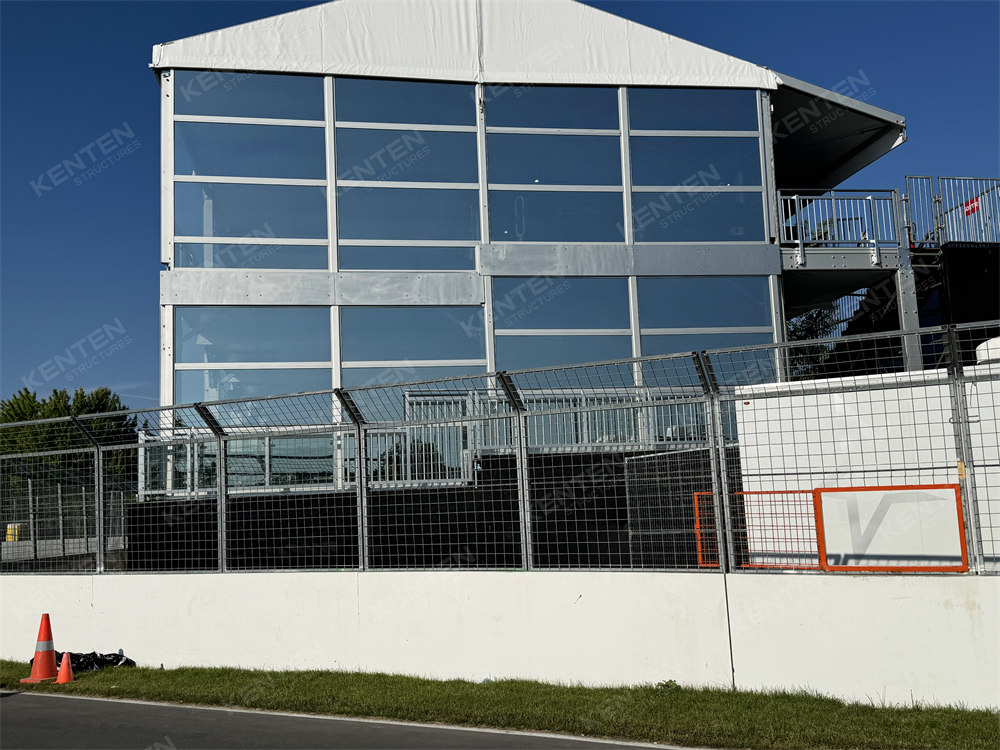
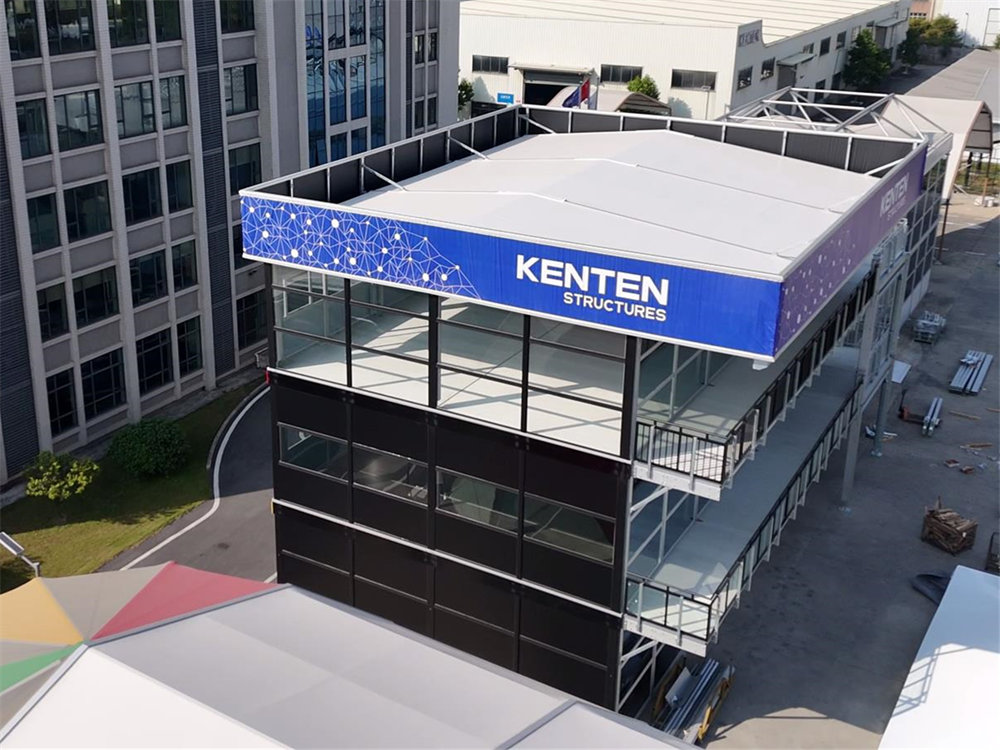
Building environment has been shaped by a deeply rooted assumption: permanence equals value. Concrete, steel, and foundations anchored deep into the ground have long been regarded as the ultimate markers of long-term investment. Temporary tents, on the other hand, were seen as short-term solutions—functional, flexible, but inherently disposable. However, this assumption is now being challenged. Across hospitality, commercial development, public infrastructure, and event-driven economies, modular tents/structures are increasingly taking into consideration—not as temporary fixes, but as long-term assets. It is the result of a broader transformation in how cities, developers, and operators think about adaptability, flexibility, and sustainability.
From Tents to Assets: A Change in Mindset
Traditional buildings are designed to be permanent in form, but not necessarily fulfill various functions. Once constructed, they are difficult to adapt. Changing use often requires major renovation, regulatory re-approval, or significant downtime. In rapidly evolving markets, this rigidity has become a liability. Modular structures introduce a different logic. A modular structures may change location, configuration, or function over time, and still remain in continuous operation for many years. In this sense, permanence is no longer about staying in one place—it is about sustained value generation. When modular structures are evaluated as assets rather than installations, the concerns shift from durability to performance.
Life Cycle Value Over Initial Construction
One of the most common misconceptions surrounding modular structures is that their value is tied primarily to speed of installation. While rapid deployment is certainly an advantage, it is only one part of a much larger equation. When assessed across a full life cycle, modular structures often outperform traditional buildings in several critical dimensions:
Structures can be dismantled, relocated, and reinstalled
Layouts, facades, and internal systems can be adapted as operational needs
Roof, wall panels, insulation, and technical integration can be upgraded without rebuilding from scratch
Modular structures retain resale and reuse value
Designed for Repeated Use, Not Single Events
A defining characteristic of long-term modular structures is that they are engineered for reuse. Connection systems material specifications are optimized for hundreds of assembly cycles.
This has important implications:
Structural frames are designed with fatigue resistance
Connection points are standardized to maintain tolerances over time
Cladding systems are modular, replaceable, and repair-friendly.
As a result, a structure initially deployed for a seasonal event may later function as a semi-permanent showroom, a hospitality pavilion, or a public gathering space—without compromising safety, comfort, or visual quality.
Long-Term Use in Hospitality and Commercial Environments
The hospitality sector has been one of the earliest adopters of modular structures as long-term assets. Hotels and resorts increasingly face the challenge of balancing capacity expansion with financial and operational risk.
Modular structures offer a strategic alternative:
Seasonal dining spaces that become year-round venue
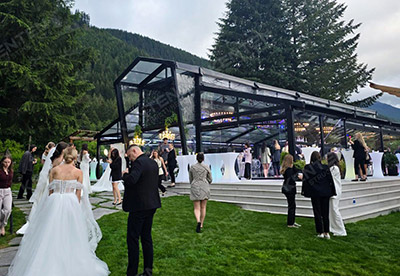
Event pavilions that transition into lounges, exhibition areas, or wellness facilities
Showrooms and brand spaces evolve with marketing strategies
Rather than committing to irreversible construction, operators gain the ability to test concepts, scale operations, and adapt layouts over time—all while maintaining architectural coherence and guest experience.
Asset Thinking for Cities and Public Projects
For municipalities and public-sector stakeholders, modular structures introduce a powerful tool for long-term planning.
Urban environments increasingly demand spaces that can respond to:
Population shifts
Seasonal tourism
Cultural programming
Emergency or temporary infrastructure needs
Modular structures can serve as libraries, community centers, markets, or cultural venues for extended periods, and later be repurposed or relocated as urban priorities change. Permanence is measured not by fixed location, but by ongoing public value. This aligns closely with contemporary planning principles centered on resilience, sustainability, and efficient use of public funds.
Sustainability Through Reuse, Not Demolition
Traditional construction often equates sustainability with material efficiency at the point of build. Modular structures expand this perspective by emphasizing reuse over demolition. Every redeployment avoids new material extraction, reduces waste, and minimizes the carbon footprint associated with new construction. When a modular structure remains in use for up to 20 years—across multiple locations and functions—its annual environmental impact decreases dramatically. Sustainability, in this sense, is no longer just about how a tent is built, but about how long it is used.
6061/T6 high-strength aluminum alloy framework
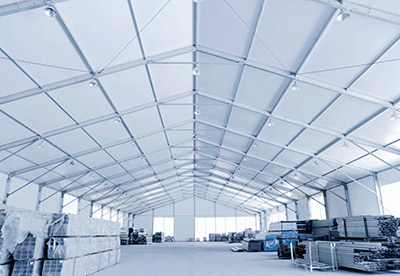
Large clear-span interiors with no internal columns
Rapid installation and dismantling schedules
Modular bay lengths for scalable layouts
Structural calculations tailored to regional snow and wind loads
Integration of suspended systems
Compatibility with European and America regulation codes
Suitable for any terrains with minimum foundations
Life span of up to 20 years
Applications That Extend Beyond a Single Season
KENTEN Structures are increasingly deployed in environments where year-round or cross-season operation is essential:
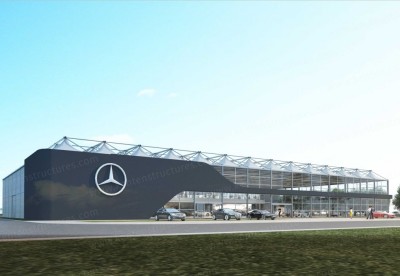
Supermarkets
Educational institutes
Exhibition centers
Transportation terminals
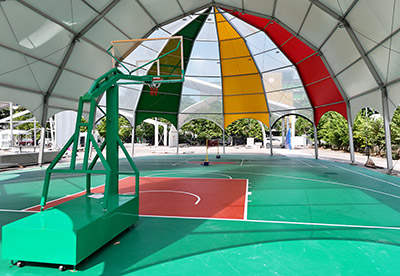
Sports stadiums
Brand showrooms
Executive offices
Museums
Concert halls
Hospitality venues
Restaurants
Warehouses & storage
Logistics & distributions
Production centers
Hangars
Cultural ceremonies
Government pavilions
Mega-event infrastructures
What begins as a winter-focused installation often becomes an integral part of the venue’s long-term program.
Redefining Permanence
Permanent buildings will continue to play a vital role. But alongside them, a new category is emerging—structures are permanent in use, and flexible in form. Modular structures as long-term assets represent a shift in architectural and operational thinking. They prioritize adaptability over rigidity, reusing value over initial cost, and performance over permanence.
For developers, operators, and public stakeholders alike, this approach offers a way to invest not just in buildings, but in systems—systems designed to evolve, respond, and endure.
Contact KENTEN to discuss a customized structure solution engineered for your events.
 HIGH-END SERIES
 STRUCTURE TENTS
 ACCESSORIES